COO: What are you asking me to imagine?
Management Innovator: That your organization already has a reliable, software-guided process for groups to design the best possible goals and actions.
Then someone offers you an alternative.
COO: How does it work?
Management Innovator: The manager gathers whatever data seems relevant, asks some stakeholders what they think, and creates an agenda that feels right.
COO: How do we know they gathered the right information?
Management Innovator: You don’t.
COO: Or heard all the important viewpoints?
Management Innovator: You know what some people said about some questions.
You do not know what all the relevant people think about every material point.
COO: How do we decide what the group should discuss?
Management Innovator: The manager chooses. The available calendar time also helps.
COO: Helps?
Management Innovator: A two-hour slot has a remarkable ability to determine how much complexity a situation is allowed to contain.
COO: And the agenda?
Management Innovator: It will usually look thoughtful. It may include data, interview findings, current-state slides and a sensible sequence of topics.
It will feel right.
COO: But we cannot know whether it contains the right subjects?
Management Innovator: Correct. There is no complete map defining what needed to be understood, which perspectives needed to be accessed, or which differences most required the group’s attention.
The agenda is plausible, not validated.
COO: Then the group discusses it?
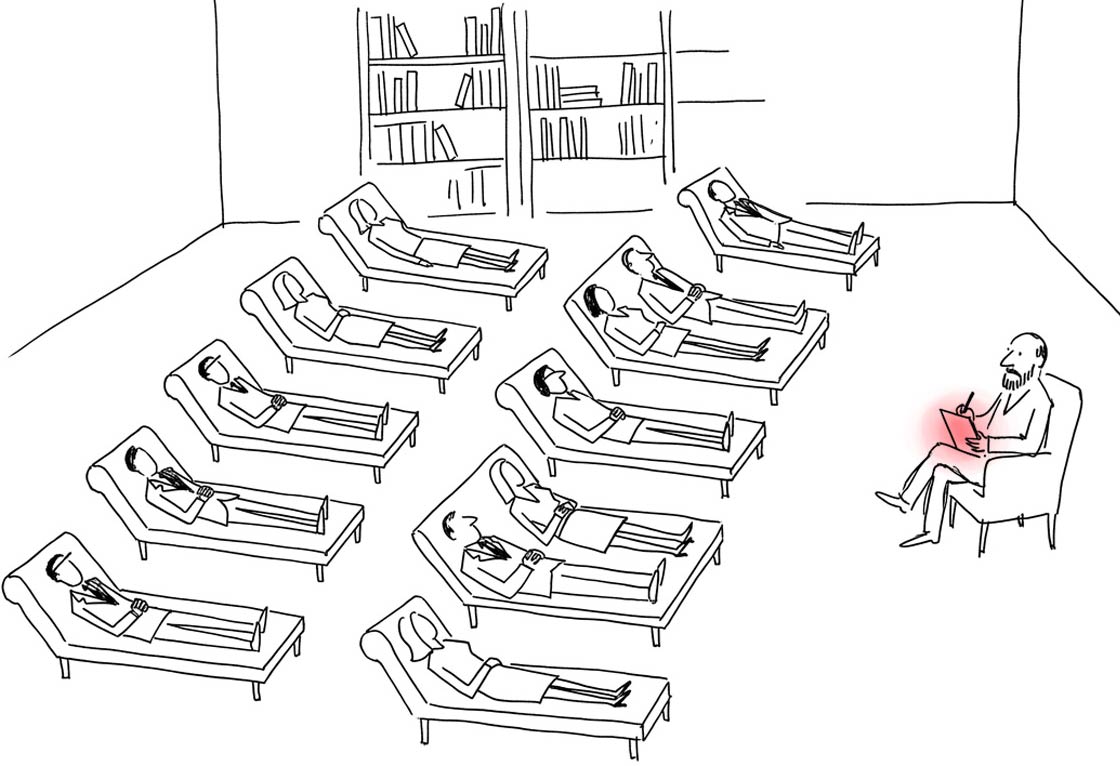
Management Innovator: Yes. People explain, challenge, debate and refine ideas until they agree, run out of time, or the leader decides that the answer is sufficient.
COO: What happens when people disagree?
Management Innovator: They talk about it.
COO: Using what method?
Management Innovator: Conversation.
COO: And if conversation does not resolve it?
Management Innovator: The disagreement may be softened, deferred, outvoted or settled by the leader.
COO: What about false assumptions, barriers and negative side-effects?
Management Innovator: Some may be mentioned.
But the process does not require the group to surface all the knowable ones, determine which are material, and resolve or mitigate them before approving the design.
Unresolved problems can always be passed to implementation.
COO: What does the group eventually produce?
Management Innovator: A set of goals and actions that also feels right.
The output may be logical, coherent and beautifully presented. Everyone can see how the pieces fit together. The leader may ask, “So, are we all agreed that this is what we are going to do?”
Few people will object at that point.
COO: So it looks like a strong design.
Management Innovator: Exactly.
That is what makes the problem difficult.
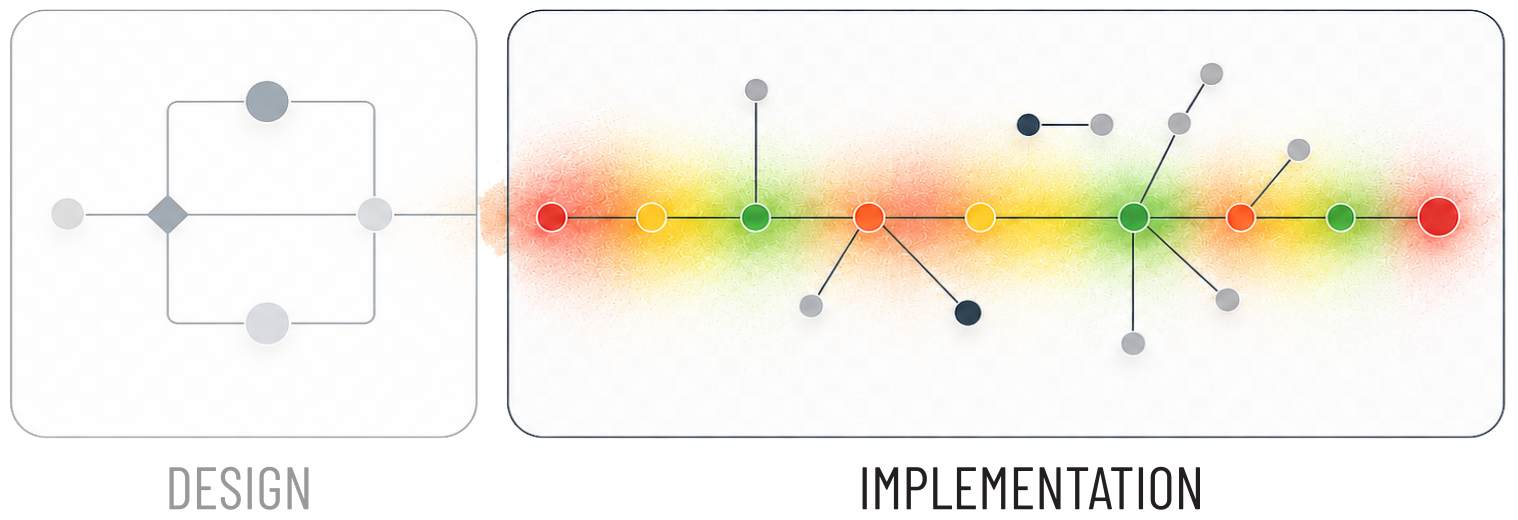
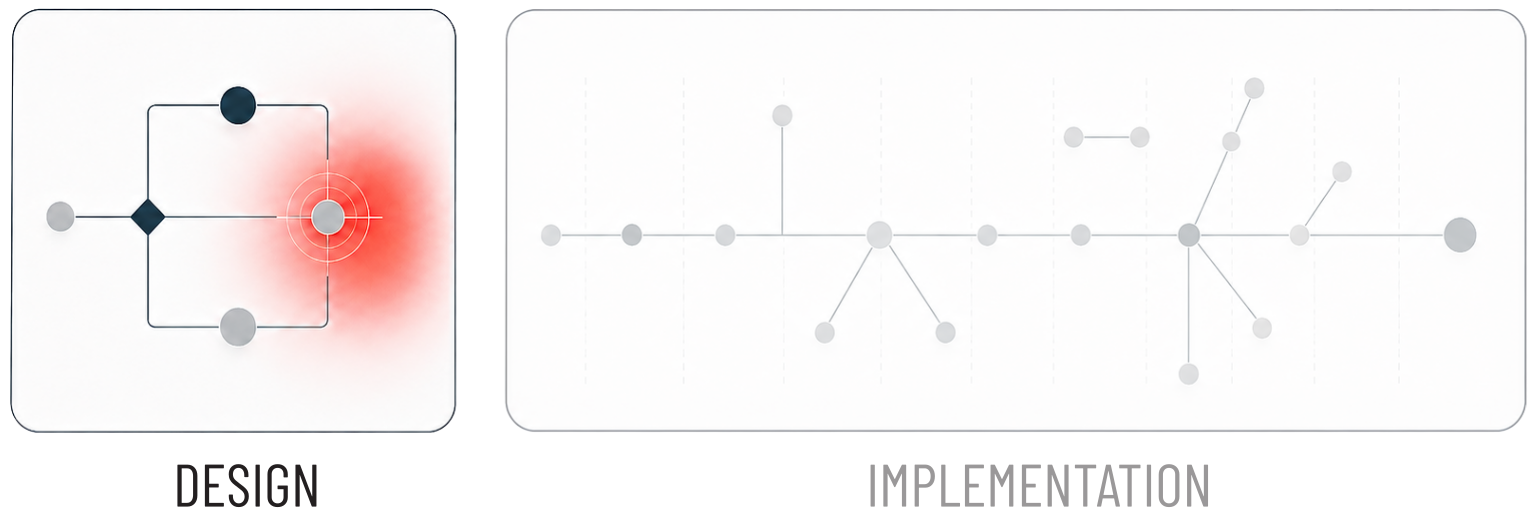
The design can look convincing while containing unseen flaws: missing knowledge, unresolved differences, inaccurate assumptions, overlooked constraints, unintended consequences and apparent alignment that does not survive contact with implementation.
COO: How do we know whether those flaws are present?
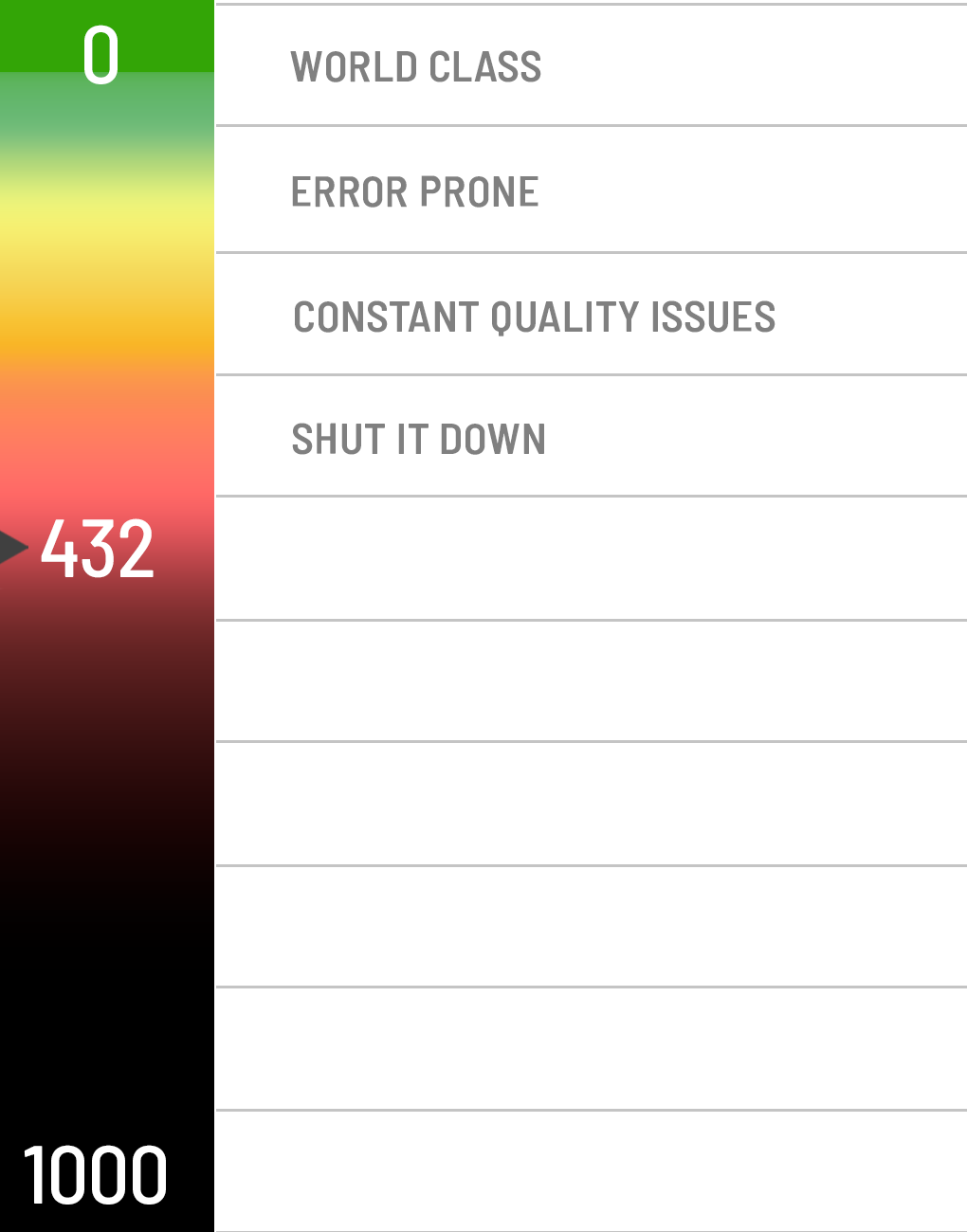
Management Innovator: You don’t. There is no objective way to measure how well the proposed goals and actions fit the situation, how feasible they are, or whether the people required to act are sufficiently aligned.
The output is accepted because it appears reasonable and the group has completed the meeting.
COO: Surely implementation will expose the problems.
Management Innovator: It will expose their symptoms.
The implementers receive the design as an instruction. They reasonably assume that the goals and actions themselves have already been properly designed.
When progress stalls, costs rise, deadlines slip or people resist, they investigate implementation.
COO: And what do they conclude?
Management Innovator: Perhaps that communication was weak. Accountability was unclear. Governance was inadequate. Managers lacked commitment. Employees resisted change. The project needed more resources or stronger leadership.
Some of those conclusions may be true.
But if the original design contained an unknown error, that root cause cannot be included in the diagnosis.
COO: Because nobody knows it is there.
Management Innovator: Precisely.
The implementation analysis may therefore be careful, professional and entirely reasonable—and still wrong.
The organization then tries to communicate, govern or execute a flawed design more effectively.
COO: What happens after that?
Management Innovator: The results are recorded as an implementation success or failure.
The quality of the original Group Design is rarely measured, so its unseen errors remain unseen.
COO: Does the organization learn anything?
Management Innovator: It learns to change its implementation practices.
It does not learn how to improve the process that produced the goals and actions.
The next manager gathers some information, asks some stakeholders some questions, creates another agenda that feels right, and convenes another meeting.
The next group produces another answer that looks good.
Any hidden design errors are again inherited by implementation.
COO: So Group Decision-Making never gets any better.
Management Innovator: Correct.
Its failures are attributed to communication, culture, resistance, leadership, governance and execution—almost everywhere except the process that designed what everyone was asked to implement.
COO: Why would I replace our SchellingPoint approach with that?
Management Innovator: You wouldn’t.
You would never buy conventional Group Design today. You inherited it.