Optimal GDM Overview

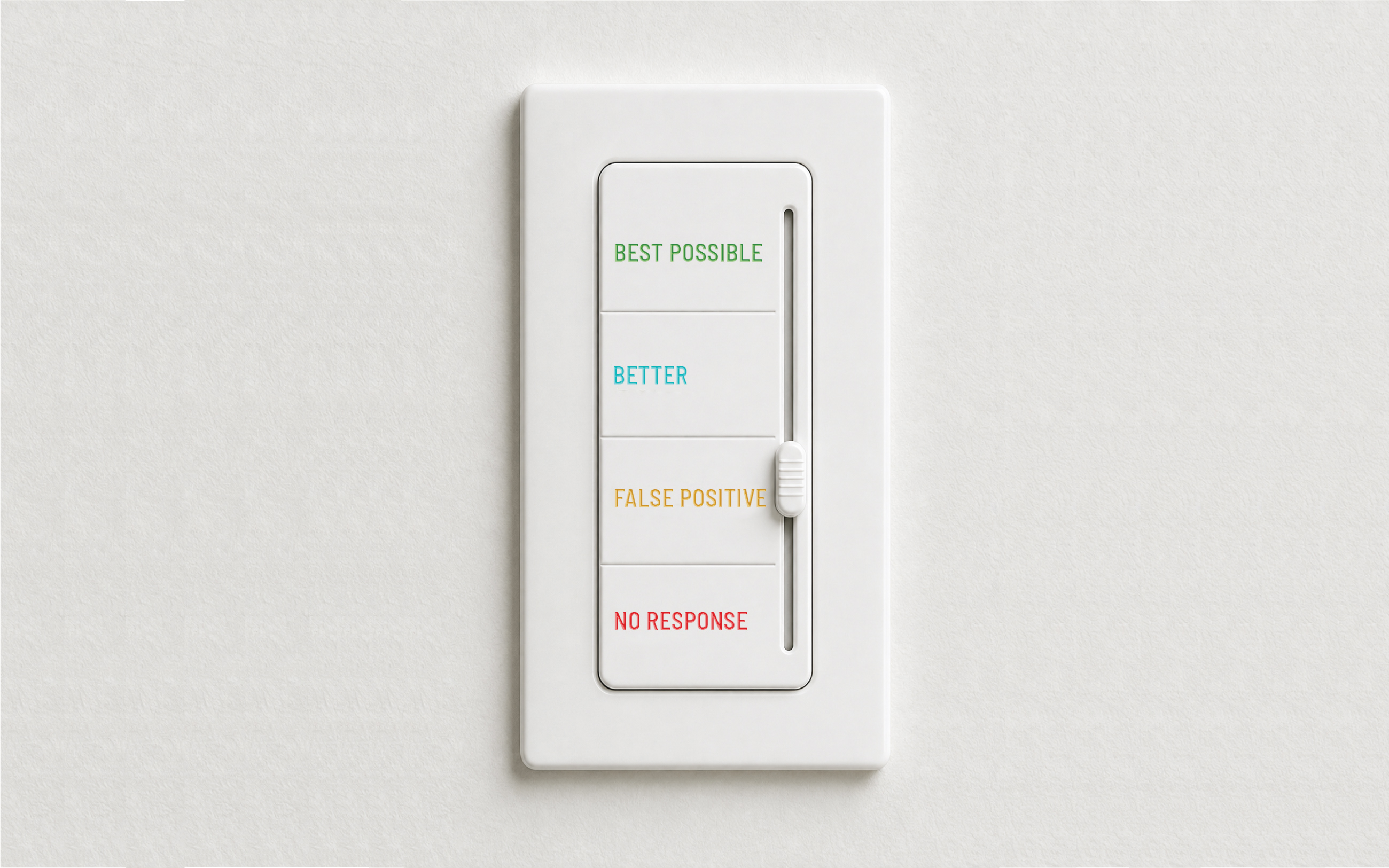
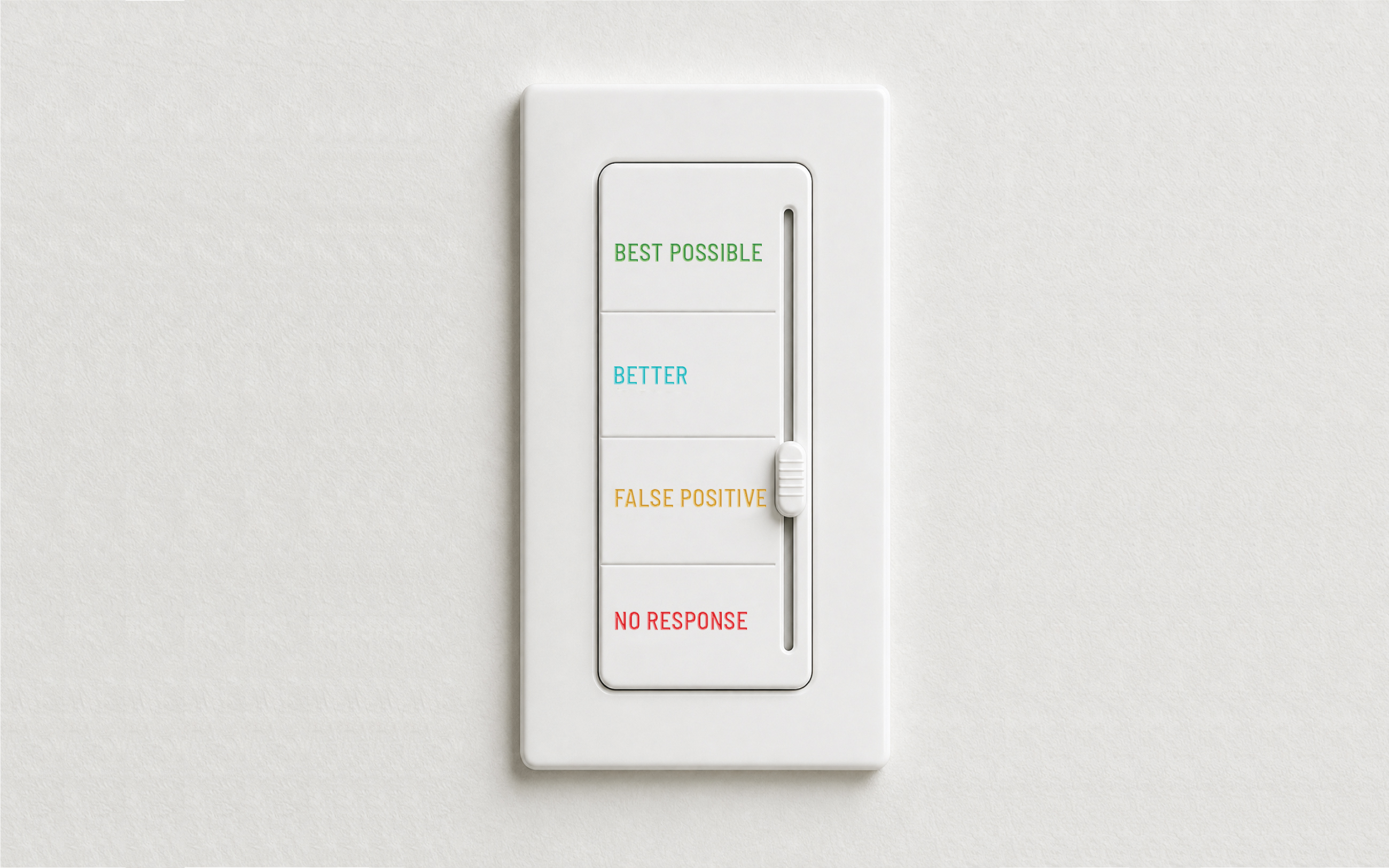
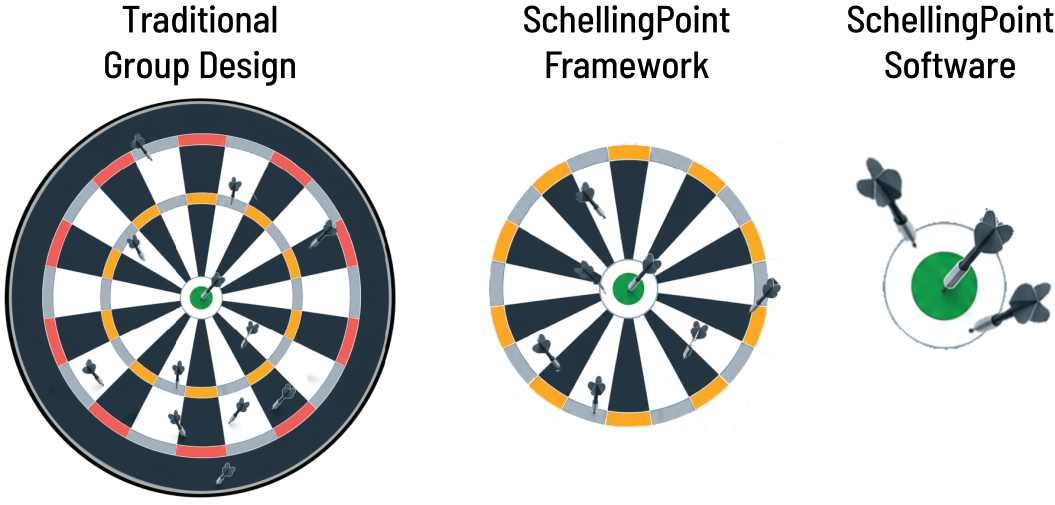
Two higher tiers of goal and action quality

Our Group Design concepts and methods enable groups to produce better goals and actions than traditional approaches. The software enables them to design the best possible.

From absence.

Traditional Group Design has systematic flaws.

Smart people with good intentions aren't enough.

The goals and actions look strong but are inaccurate and incomplete.

To presence.

Optimal GDM works on the established principle that the strongest attainable goals and actions are already there - latent in the data and what people already know.

Optimal goals & actions.

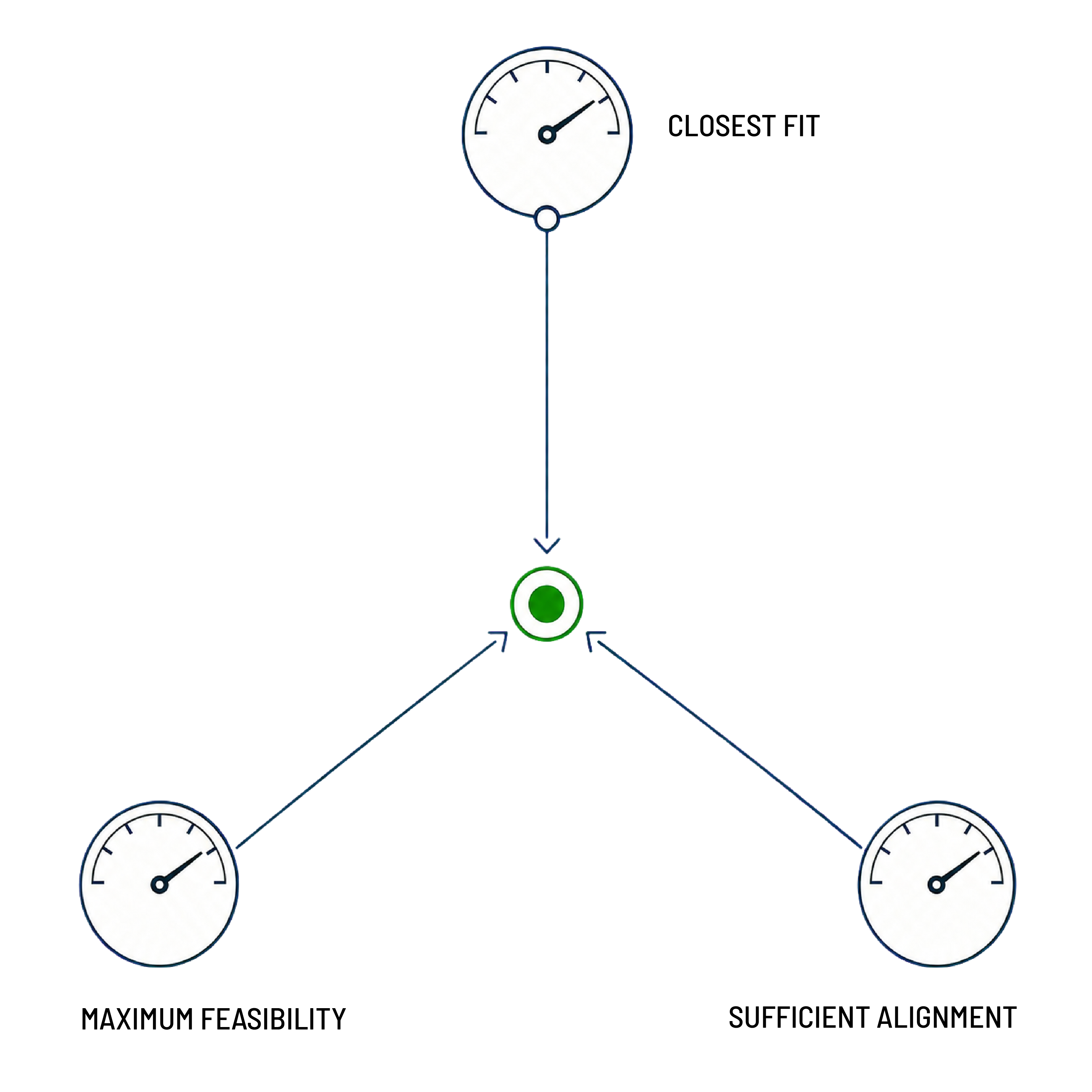
The best balance of three essential characteristics:

- Fit (the right answer)
- Feasibility (that can be implemented), and
- Alignment (sufficient support from those needed.)

Tighter grouping.

Our research-derived concepts, methods, and software enable groups to remove most of the current problems in group decision-making.

Zero learning curve.

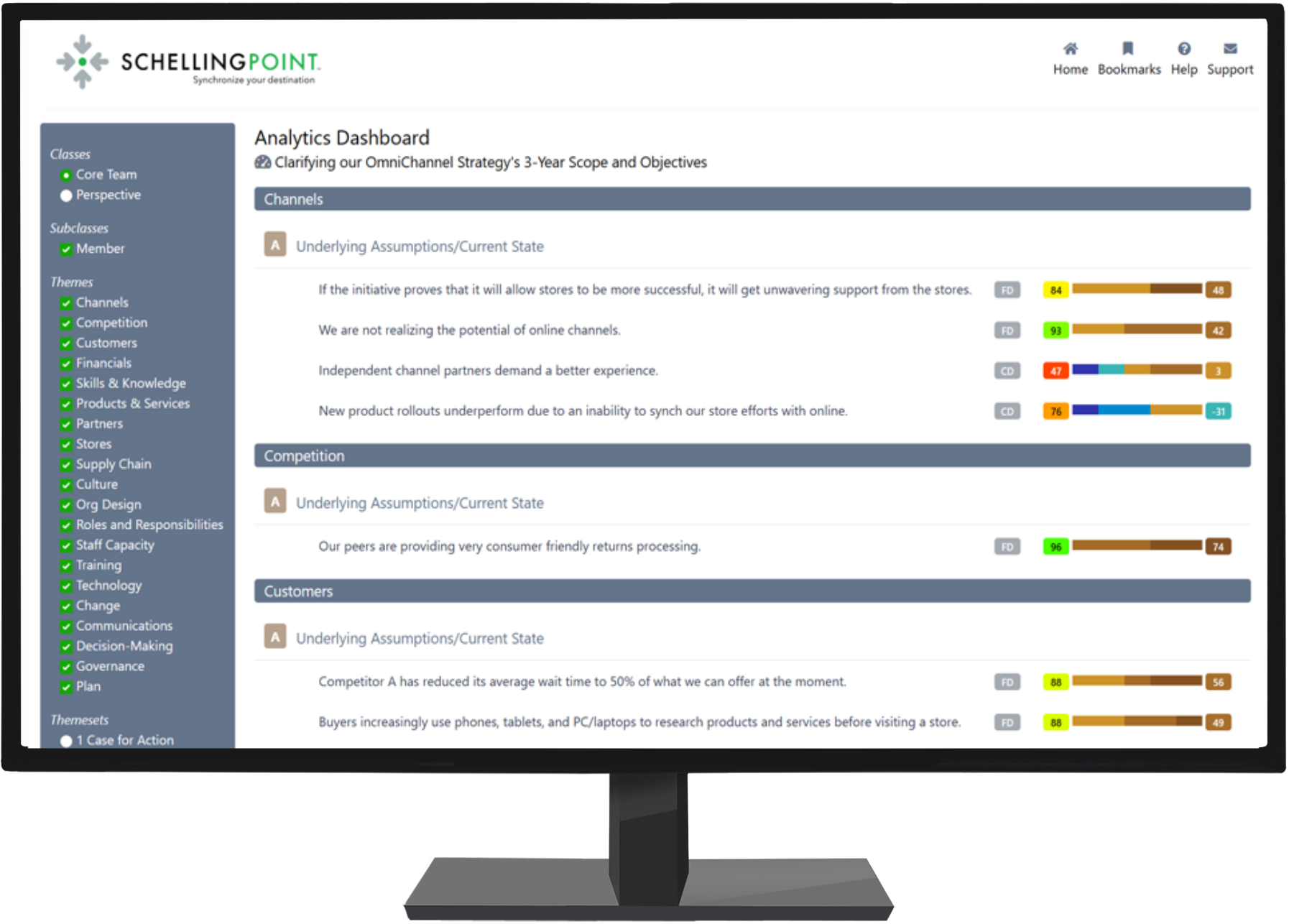
The concepts and methods are embedded in software for immediate, scalable use.
FAQ
Frequently asked questions
Does this mean groups have to know new mathematics to design better goals and actions?
I've never heard of this mathematical principle that an optimal solution always exists.
Why are optimal goals and actions judged against Fit, Feasibility, and Alignment?
My groups already focus on Fit, Feasibility, and Alignment. What is different?
What is oFFA?