
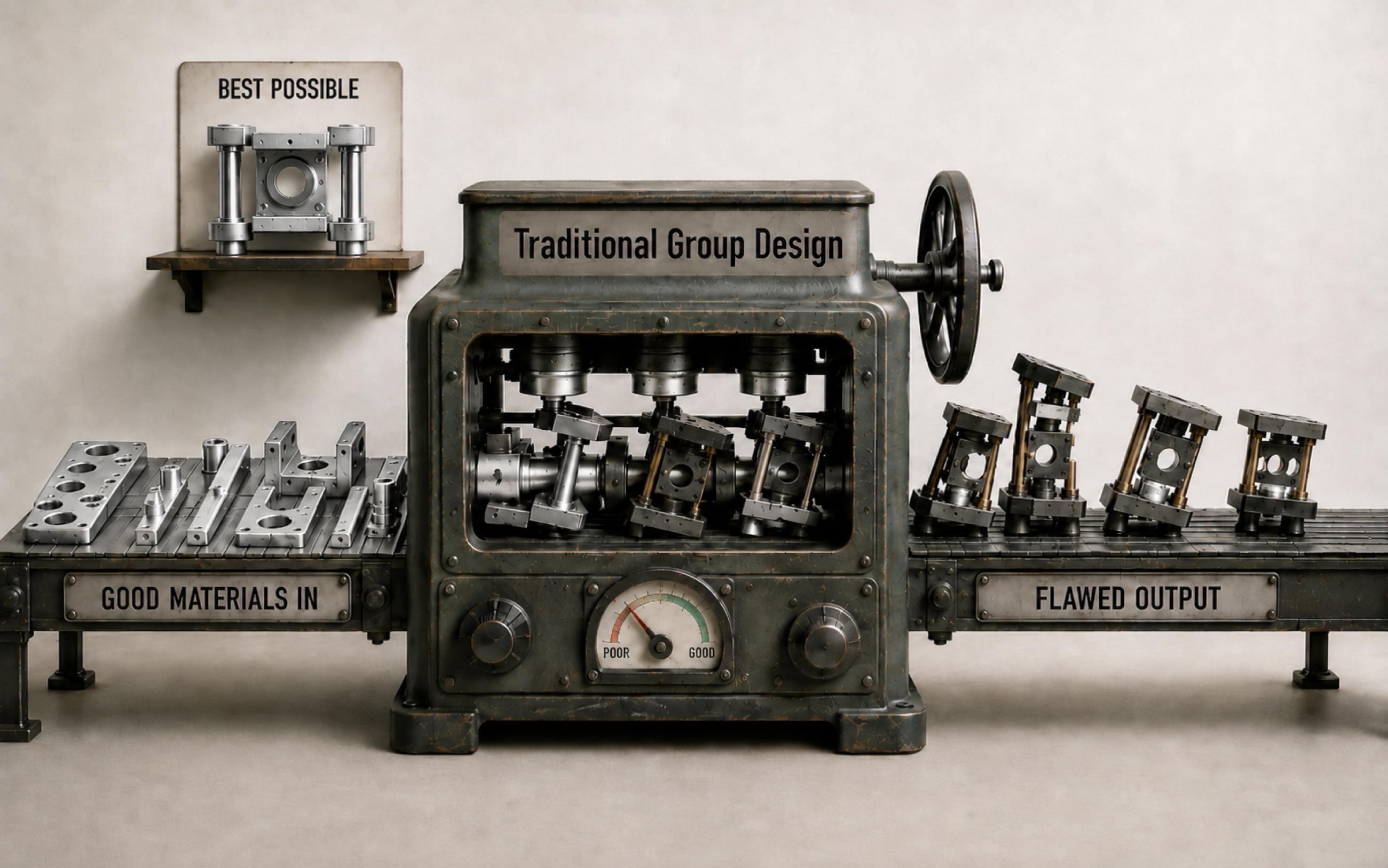

Group Design Is Not a Team SportUnfortunately, most decision makers and designers are never taught the important distinctions between I Choose, I Design, We Choose, and We Design. As a result, many books, articles, and experts offer advice without specifying which form of decision-making or designing they are addressing.
This matters because the four contexts are fundamentally different.
Card games and sports are common sources of decision-making metaphors. Yet most card games are closed, zero-sum systems with predefined rules and actions, competing objectives, and rapid feedback. Players make choices from a limited set of available moves, and the consequences of those choices are usually visible almost immediately.
Many sports teams similarly rely on predefined plays. The challenge is selecting and coordinating known actions within known rules.
Group Design is fundamentally different.
Group Design is typically an open, non-zero-sum activity. The goals themselves may be designed. New actions can be invented. Constraints may change. Success depends on coordinating many people over time, often without knowing in advance which actions will be required. Outcomes may not become measurable until weeks, months, or years later, by which time many factors may have influenced the result.
Advice that works well for choosing among known options may be ineffective, or even harmful, when designing new goals and actions collectively.
When an author, consultant, or facilitator does not explicitly declare the context of their advice, apply the I Choose / I Design / We Choose / We Design lens before adopting it. What is helpful in one branch of decision-making can be damaging in another.

Most Unintendeds are Referenced in the Past Tense, After Causing DamageOther than in the military, healthcare, and engineering sectors, only a small number of specialist approaches explicitly examine unintended consequences caused by a proposed action. We found no mainstream, general-purpose Group Decision Making methodology that treats them as a distinct, mandatory category of decision input.
However, when asked before the first group meeting how they could trigger unintended negatives consequences, on average, group members express 13. Each can be enough to cause people to reject the proposed changes.

Become Comfortable Discussing Non-likemindednessBeing likeminded or non-likeminded is the technically correct label for whether a group all agrees with an opinion without being able to learn what each other thinks. It is also far more discussible than alignment and misalignment, which are dangerous words in groups.
Though likeminded and non-likeminded are not the easiest words to use, most people immediately understand their meaning and they are safe to use. It is their right to be non-likeminded and so rarely feel judged negatively. Use opens up productive dialogue where misalignment closes it down.

A Note on DisagreementThese principles may appear straightforward, but all four depend on important disagreements being surfaced and reconciled.
Many leaders, managers, consultants, and facilitators openly acknowledge that they prefer not to engage with conflict and disagreement unless they have no other choice. Traditional Group Design methods allow them to navigate around that concern, progressing the work without directly addressing areas of non-likemindedness.
While more comfortable, this approach carries a cost. Unexplored disagreements contribute to false positives: designs that look convincing in the room yet fail during implementation.
SchellingPoint's approach is designed differently. Its principles and methods seek to minimise unnecessary discomfort while ensuring that the disagreements most relevant to Closest Fit, Maximum Feasibility, and Sufficient Alignment are surfaced and reconciled before action is taken.

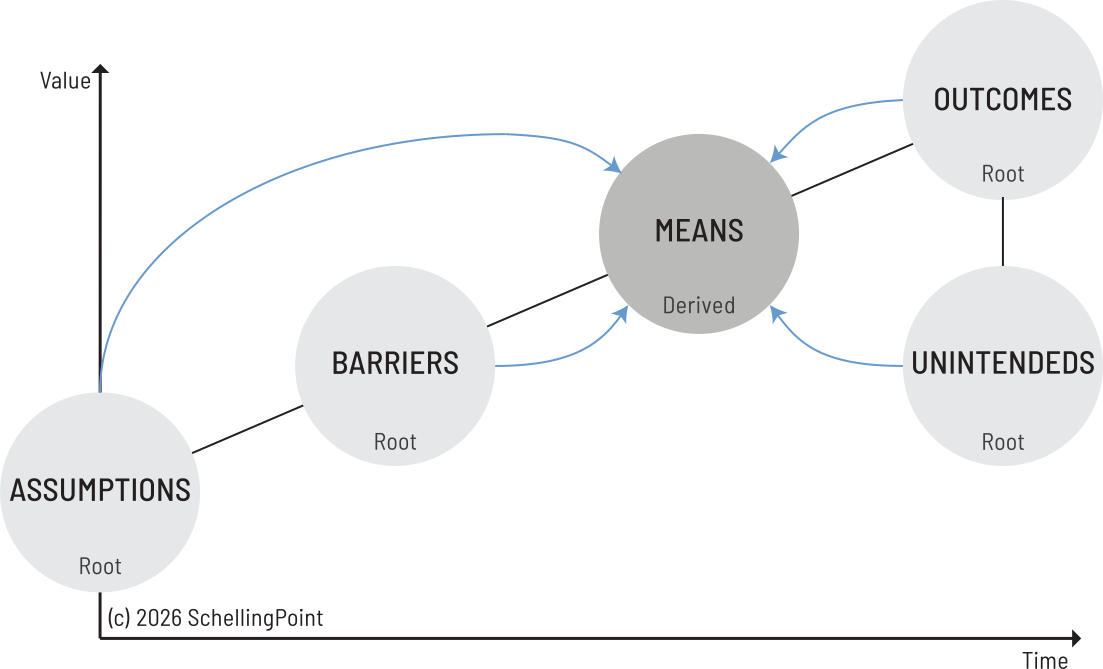
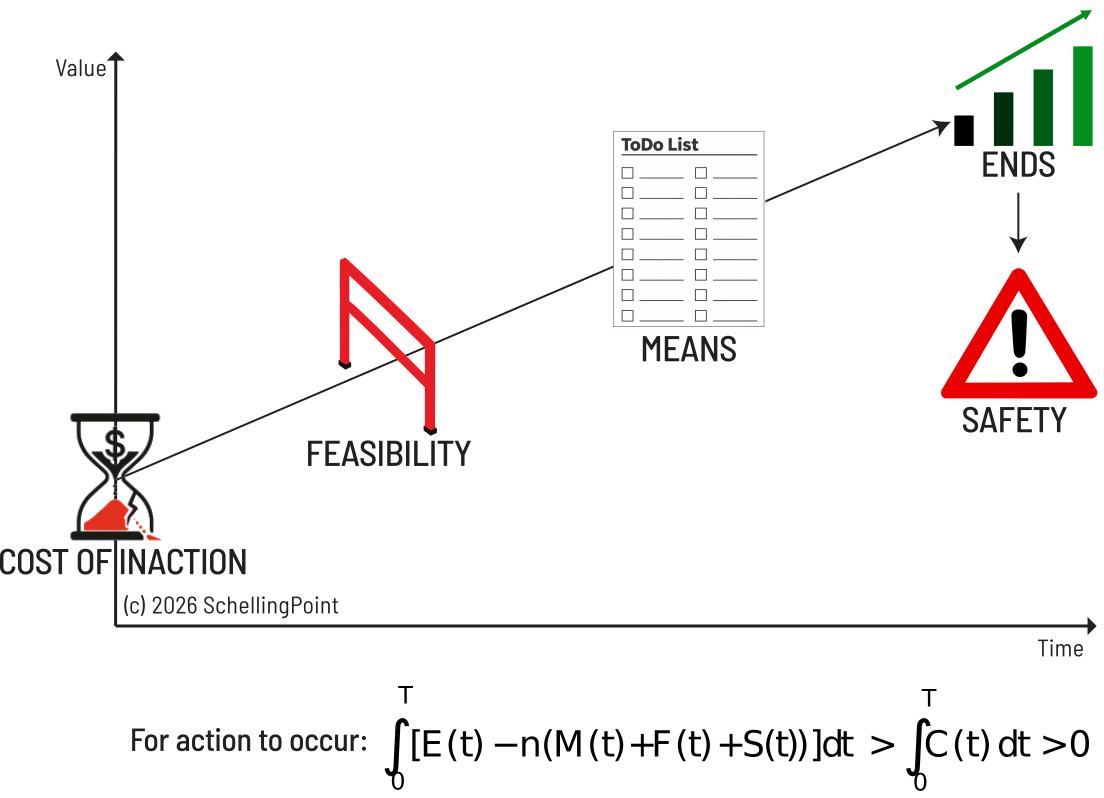
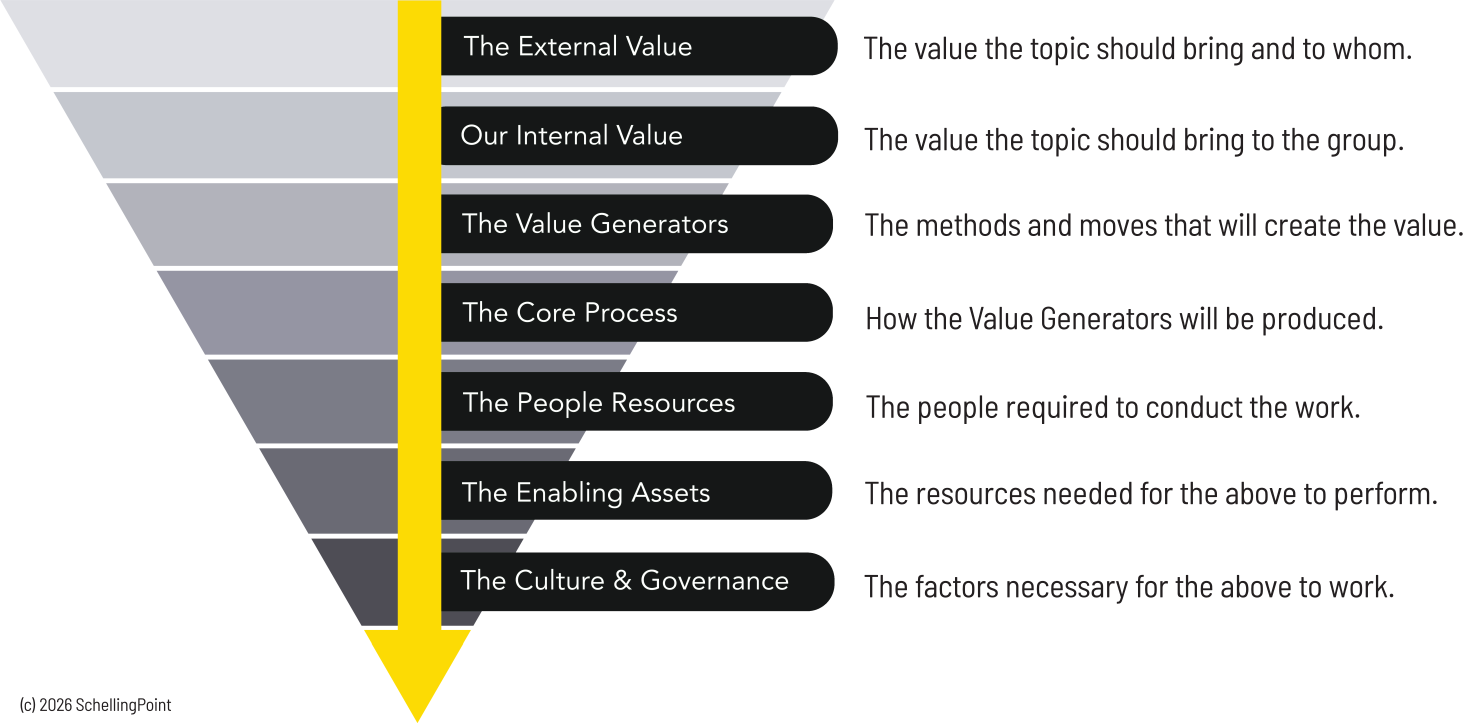
FramesFrames have been developed and adopted for many situations. Common public examples include SWOT, PESTEL, ADKAR, Porter's Five Forces, and McKinsey's 7S. They bring understanding to the specific situations for which they were designed.
SchellingPoint's frames are universal meta-frames for the Group Design of any topic. Topic-specific frames, such as those above and many others, augment the meta-frames where they exist and are topic-relevant.

The How of OptimalOur research revealed that most groups already possess sufficient knowledge, experience, and good intentions to design high-quality decisions. What has been missing are the methods and techniques needed to systematically convert that collective intelligence into Closest Fit, Maximum Feasibility, and Sufficient Alignment.

Decision Lifecycle ManagementGenerally, goals and actions are viewed in two stages - identify then implement them. In truth, decisions follow a lifecycle from Signal through Response and Impact to Insight.