Decision Process Research Insights

Group Decision Design is most organization's weakest capability

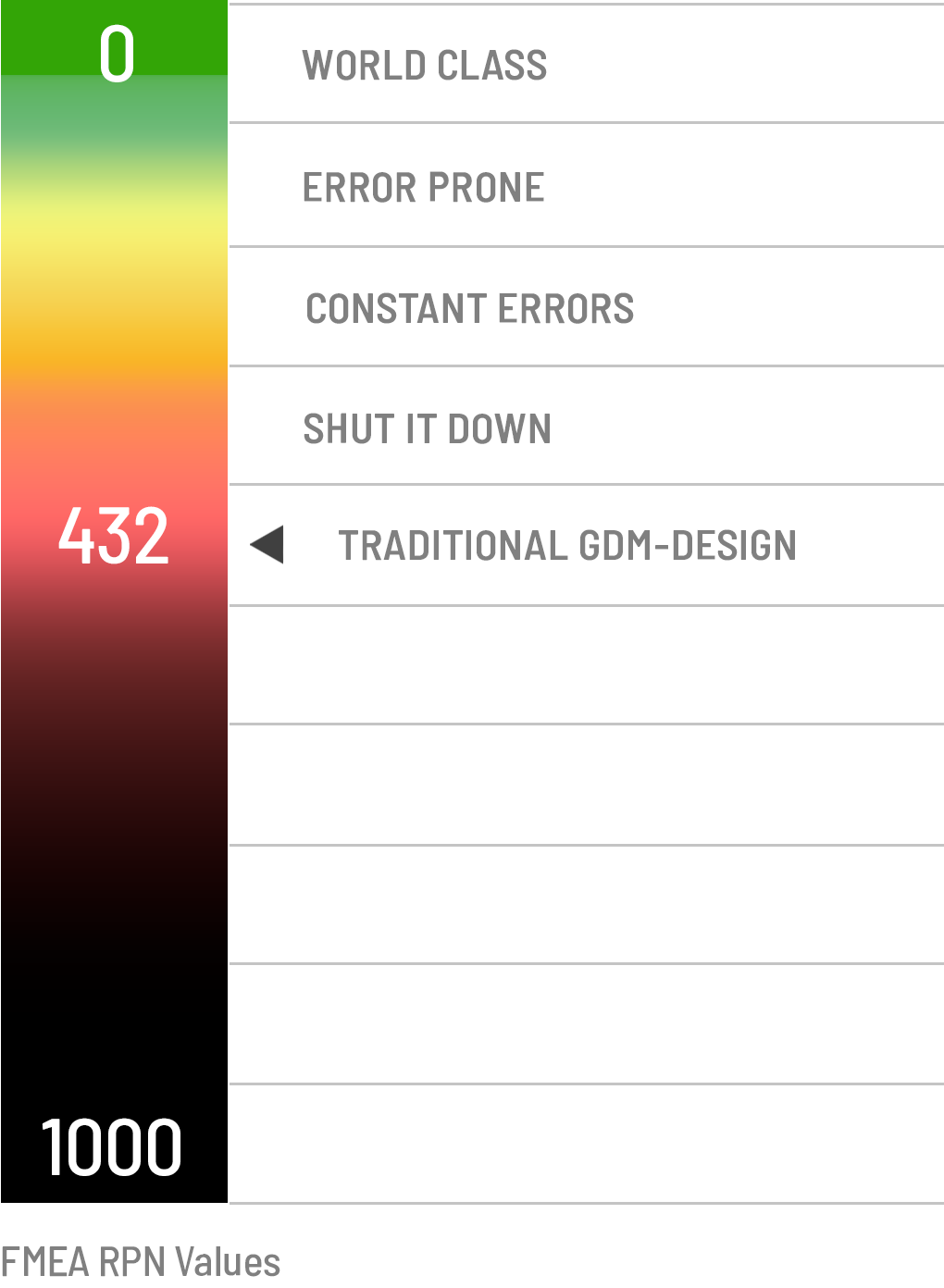
Measured as a process, leaders would shut it down for repair and overhaul if it were anywhere else in the organization.

Repeated problems.

Group Design occurs constantly throughout organizations.

Unlike repetitive mission-critical activities, noone owns this one.

The consequences shouldn't be a surprise.
GROUP DESIGN IS A Fragile Process

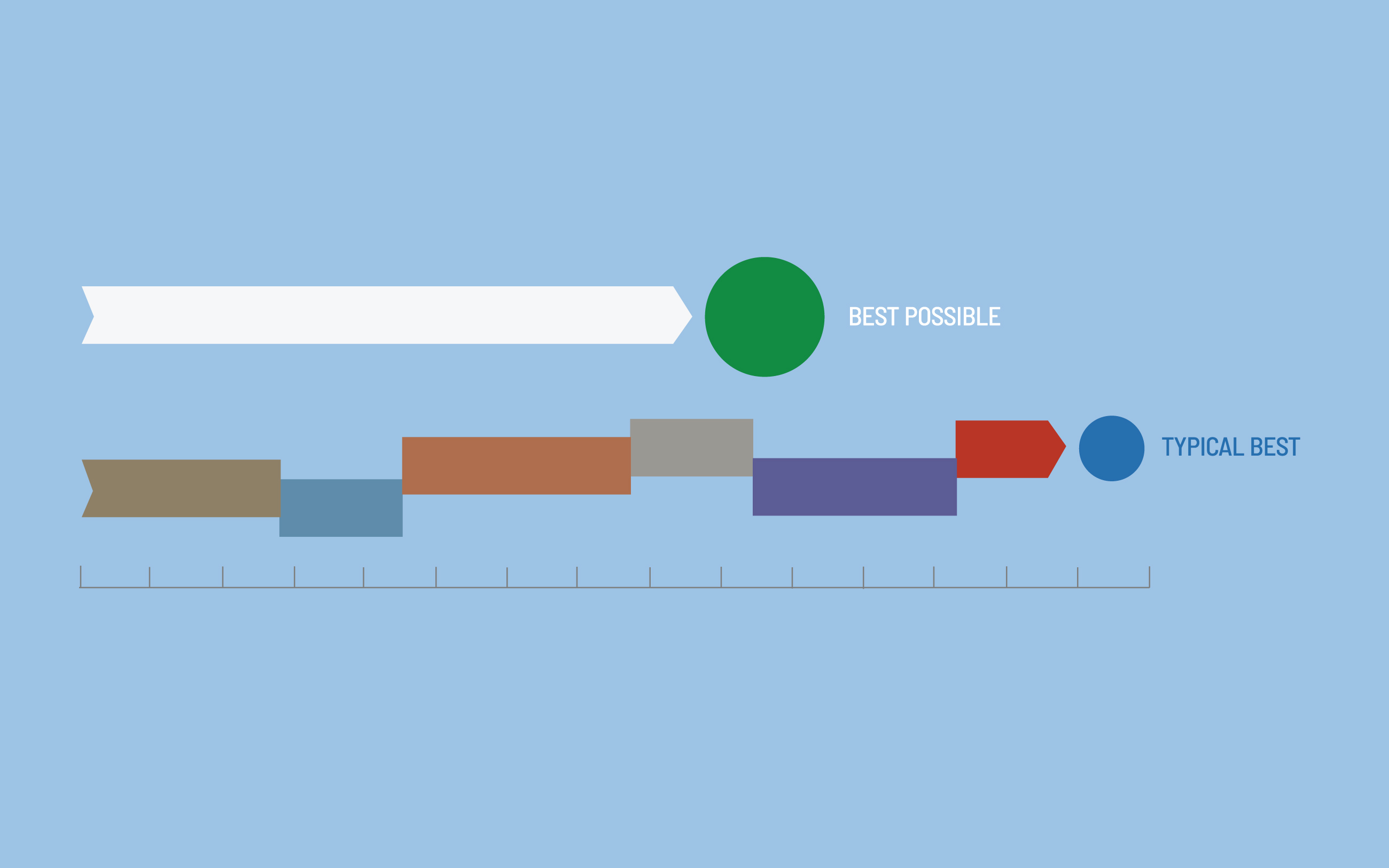
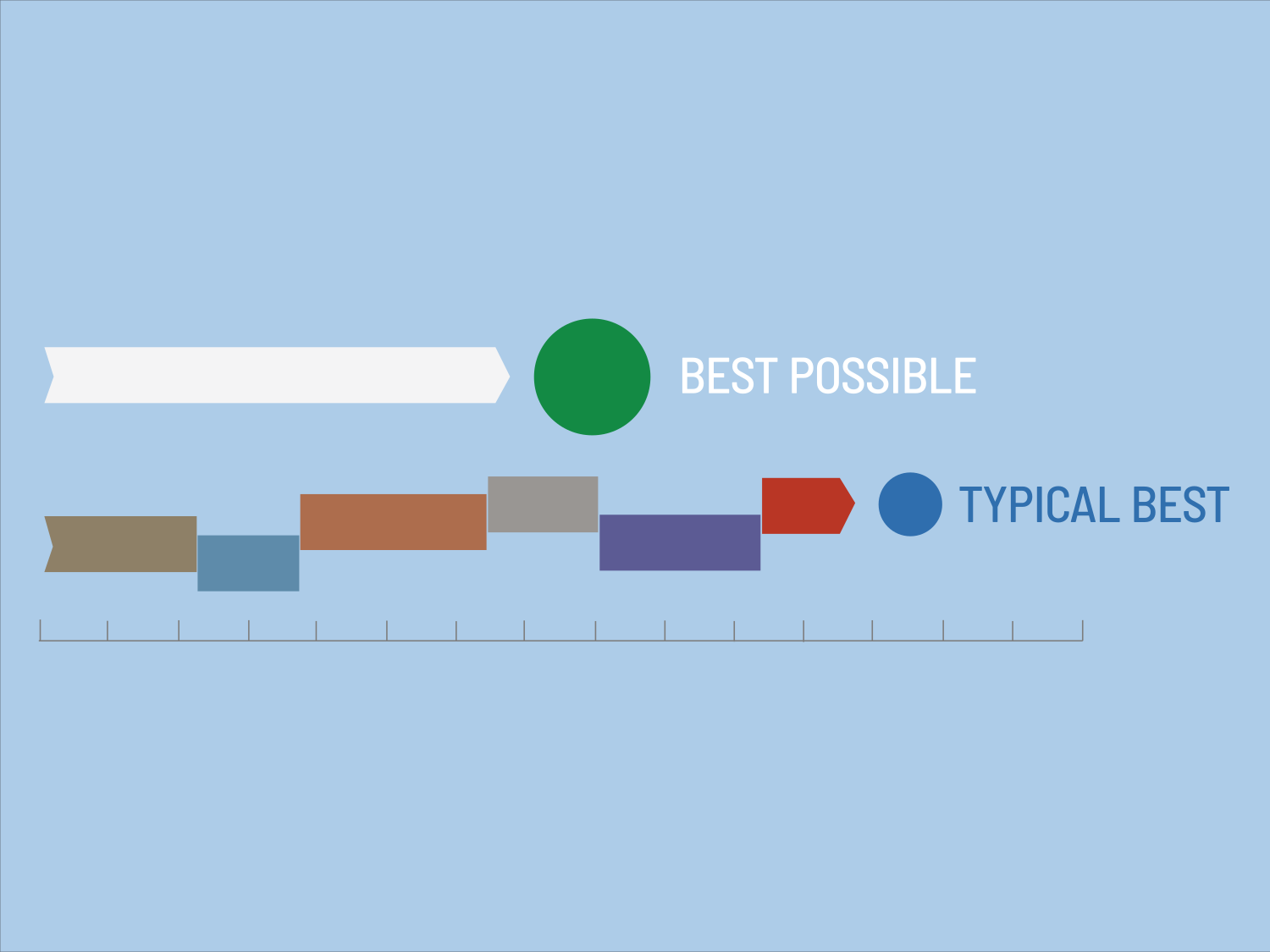
Every Group Design begins with the optimal goals and actions within reach. Then 41 procedural errors move them out of reach.

Scroll to follow a typical decision from setup to commitment into implementation.
Click on a leak's name to see its explanation.

SETUP & FRAMINGDIAGNOSISAGENDA DESIGNCONVERSATIONSCOMMITMENTAFTER THE DECISIONOptimal DesignActual design — weakening one leak at a timeThe first conversation starts here →Quality Loss
Stage 1 of 6 · Leaks 1–8

Setup & Framing

In many Shared-Response situations today, the optimal response is already out of scope when the scoping step concludes.

Answering the Wrong Problem
Certain situations are clear. The three-year-old strategy is now three years old. The group's shared purpose is to refresh the strategy. But in most situations, the required response from the group is not so clear. How the leader frames the situation sets the group's direction of travel, yet executives and managers have no common technique for creating a sufficiently accurate and complete description of the situation.
1
Incomplete Setup
Many Group Designs start with no setup, conducted ad hoc as a/the meeting topic. When groups don't pre-process a group decision, their dialogues are a biased walk through and around a partial field of opinions. They will usually emerge at the end with a set of logical and rational goals and actions, though not the closest fit to the situation's need, with maximum feasibility, and sufficient alignment. Design quality and implementation performance are compromised by initial speed.
2
Starting With Option Generation
The conventional notion that a decision is a choice among options skews group decision design from the first step. Groups feel a need to have options to choose among. This has led to the method of summarizing the situation, eliciting ideas, suggestions, or recommendations for how to respond, and then identifying the best option. While sufficiently accurate for straightforward situations, the method produces many false positives.
3
Inaccurate Duration
Assuming a response has a value, if it is not implemented each week, there is lost value capture or avoidable expense. Preconceived views of Group Design cause it to overextend. (E.g., six-month planning cycles.)
4
Lack of System Dynamics
A group's actions to achieve its stated goals will be carried out on the current 'system-of-the-topic'. This is the interconnected and interdependent network of actors, activities, and attributes that comprise the topic at hand. Due to a lack of training and education in Systems Dynamics (not just Systems Thinking), hundreds of groups tested only identified 50% to 80% of a topic's system before discussing it. Research also shows that when implementations underperform, unexpected negative actions occur in parts of the topic's system that were not explored. Many groups overestimate their knowledge of a given topic. This is problematic when most situations are new to the decision designers.
5
No Shared Purpose Defined
Group Design is a 'serious game' where everyone constantly balances Me vs. We. Current approaches do not require the group's shared purpose to be explicitly defined - their We. This omission causes problems downstream, particularly when trying to resolve disagreement.
6
Participants Identified Prematurely
If we consider the first role of group members to be a source of relevant facts, information, and opinions, they should be identified only after the situation's System-of-the-Topic has been established. In identifying it, it provides the 'shopping list' for which people are the stores. Current practice is to identify 'the stakeholders' - often the first thing that is done when a new situation arises - then determine what to learn from them. This leads to significant incompleteness in data and opinions.
7
Missing Data and Opinion Sources
Without System Dynamics, it is unlikely that all sources of data and opinions will be identified. When used, subject inclusion/exclusion logic prunes the participant list that would otherwise yield the topic's full Collective Intelligence.
8
Stage 2 of 6 · Leaks 9–15

Diagnosis

Multiple methodological errors lead to groups starting conversations thinking they are at point A and should head toward point B, when they are at point C and should be heading towards point D.

Incomplete Base Data
Groups rarely gather and see Group Design with fundamental facts and figures. This causes downstream waste in people holding onto inaccurate positions, unnecessary and time-consuming resolution of inaccurate inferences, and the consumption of agenda time that could have been allocated to more valuable topics.
9
Incomplete, ineffective Opinion Prompts
People share their data and opinions in response to verbal and written prompts. Surfacing all of a person's thoughts on a shared topic is more complex than asking them a list of obvious questions.
10
Unsafe Testimony
Participants possess opinions on the shared subject they want to express but are uncomfortable having them attributed to them. Traditional opinion-sharing approaches provide insufficient personal safety. This leads to the withholding of consequential opinions, whose absence from the group's dialogue weakens the final design quality.
11
Flawed Transposition
Participants' opinions are transformed into alternative meanings by well-intentioned but untrained conversion methods. One person can say and mean one thing, and three other people will play it back as five different versions, from nuanced to wholesale changes in the point being made.
12
The Stakeholder Interview Flaw
The classic Stakeholder Interviews and Analysis method, developed in the 1920s and brought into the mainstream of business in the 1980s, was not designed for group decision-making. It contains a procedural flaw that leads to inaccurate conclusions about stakeholders' views, misleading groups before the first conversation. It leads to flawed agendas that prevent groups from responding to the real situation.
13
Single Inquiry vs Triple Inquiry Error
After asking group members for their opinions on a shared topic, we gathered their input and asked them to indicate their level of agreement with the group's views anonymously. On average, groups are like-minded on 24% of their opinions on a shared topic and non-like-minded on 76%. When we gathered their private reasons for agreeing or disagreeing with the 76%, we learned that many of their indications of agreement were qualified disagreement, and their indications of disagreement were qualified agreement. These flips have a significant impact on the conclusions that are drawn from them. Traditional Group Design methods only conduct the first step.
14
Summary Communication Error
At some point in the group design of goals and actions, there is an expression of the topic's current state and direction of travel. Even if all prior quality leaks were fixed, the group would receive an inaccurate and incomplete description. Not considering intentional suppression, camouflaging and packaging, three different people will draw three different sets of conclusions, assemble and present them in three different ways. Each might feel correct to the group, but each is flawed: a managed, not natural product.
15
Stage 3 of 6 · Leaks 16–22

Agenda Design

The agenda drives the group's conversion of data and opinions into goals and actions. By the time the first conversation starts, few are designing the best possible.

Invalid Dialogue Time Allocations
Before anything is known about what a group will need to discuss, the time allocation is set. Either the topic owner/leader allocates a half day, a day, two days, or more, based on the topic's relative importance and an estimate of what might be required. Or the Design Guide informs them that they handle such situations in a certain number of days with a one-, two-, or three-day workshop. These times have no bearing on what will be required, but an agenda will be fabricated that consumes the time, with the implicit expectation that it will be enough for a first-class output.
16
No Target Output
Other than declaring that the process will produce a strategy, a policy, an agreement, or whatever label is appropriate for the group's goals and actions, there is no list of content or characteristics to aim for. The presumption is that any conversation about the topic is valuable, to varying degrees. The vagary causes potential agenda content to be judged on its merits, or a subjective evaluation of its importance and contribution to the design quality.
17
Flawed Agenda-to-Output Mapping
Selecting content for a Group Design agenda is almost entirely subjective. There are no frames, models, or heuristics that leaders and agenda designers can use as job aids. Consequently, they can explain their inclusion and exclusion choices, but not how they support an optimal balance of fit, feasibility, and alignment. It is not humanly possible.
18
Negative Conversation Minimized
Group design of future-defining goals and actions mostly occurs in a micro-environment of generation, positivity, and optimism. Whether that is natural or artificial, such as in a bad-problem solving situation. Beyond accepting the unpleasant realities of the current state, the majority of the dialogue focuses on better images of the future and the actions to produce them. Only a certain amount of discussion of issues, barriers, and constraints, negative side effects, blowback, and potential backfire can be scheduled. This usually does not account for the reality that groups foresee as many constraints as they do actions.
19
Avoidance of Difficult Topics
Too often, leaders require that uncomfortable topics be omitted from the agenda. Challenged by Speaking Truth to Power binds, some design guides will not push back. When we have had the opportunity to intervene, the rationale has often been a concern that the current dialogue techniques might not produce a productive outcome. When difficult subjects have been reinstated, the outcomes have been positive, often pivotal. Invalid projections of unsafety can privately self-limit progress.
20
Sequencing Error
In some cases, it is 'obvious' that Item A should be discussed before Item B. However, two different agenda designers often have different views on the obvious. There are many elements of a topic where the correct pathing logic is not obvious. Compounding this with preferences for 'setting the stage', 'getting straight to the heart of the matter', and other lenses, unnoticed by the group, pathing logic that would build to an optimal output is compromised.
21
Uncertain Dialogue Methods
Different opinions in different states require different dialogue techniques to process them correctly. Without defined techniques, there is no control over the dialogue beyond prescriptive exercises. The agenda only defined what, not how.
22

Milestone: when the group starts its first conversation, 22 of the 41 quality leaks identified by the research have already occurred.
Stage 4 of 6 · Leaks 23–32

Conversations

Beyond power, politics, and personality dynamics, the almost complete lack of support for how to conduct Group Design dialogues leaves members doing the best they can.

Not Confirming Assumptions
In most cases, assumptions - It is this, They are doing that, We need to get better at this - are declared by the group leader. The group may ask clarifying questions, but may not question them. Leaders typically express 3 to 5 assumptions. Group typically have 25 to 30, and they only agree on 20%. Key assumptions are never brought into the decision design or tested for like-mindedness.
23
Weak Convergence
The ideal outcome from discussing a disagreement is natural convergence. Failing that, authority-forced convergence. Failing that, failed convergence. The latter is the agree-to-disagree, the items placed 'on the Parking Lot' but not revisited, and the strategic convergence where an appearance of agreement is false. The lack of a universal method for reconciling non-like-mindedness leads to unnecessary authority and failed convergence.
24
Unresolved Uncertainties
Few things will bring group decision-making to a halt faster than "Well, it depends." Despite leaders' and managers' heightened awareness of contextual uncertainty, few have been trained to identify and control a situation's uncertainties.
25
No Cost of Inaction
When a group has designed its goals and actions, the base option in the choice they face is not to implement them. That would come with a cost: the Cost of Inaction. Unfortunately, the Cost of Inaction is not part of the business vocabulary. So there was not way for leaders and managers to easily estimate it for each situation. This one omission contributes to imprecise fit, low feasibility, and weak alignment.
26
Incomplete External Goals
At every point in the value chain of which they are a part, a group's goals and actions should bring value to the stakeholders they ultimately serve. Though vehemently endorsed, the sentiment rarely translates into targeted benefits and gains for those stakeholders. Goals are explicit for the group, however. WIIFM is strong; WIIFT (Them) is mostly weak.
27
Insufficient Goal Ranking
Groups rarely rank their goals. For multiple reasons. This prevents them from prioritizing investments in people, money, and other finite resources initially and as new needs arise. The time saved by avoiding difficult conversations before implementation increases after the damage occurs.
28
Self-Limiting
Groups fail to separate need from ability. Goals that would add to the design's fit for purpose are regularly rejected during dialogue for feasibility reasons. The same occurs with actions. "It would be a good thing to do, but we couldn't do it." Even among boards, executives, and senior leaders, feasibility bias is common in group decision-making.
29
Not Rightsizing the Means
Few groups like to remove proposed actions if they can be feintly tethered to a goal. There is no consistent notion of underfit, fit, and overfit when discussing the means to produce an end. Two consequences are solution bloat and missed innovation.
30
Flawed Problem Solving
Traditional two-step problem-solving has an inherent flaw (noted in academia), leading to consequential but unseen solution-fit error.
31
Affirmative Prompting
Most group dialogue leaders close items with affirmative prompts. "So, we are all good with this?" "Everyone is ready to move on?" "So, we're in agreement then?" It generates multiple small false positives - assumptions, goals, and actions classed as endorsed, carrying unspoken disagreement.
32
Stage 5 of 6 · Leaks 33–37

Commitment

Groups will produce something that sounds good and reads well. As false positives do. Paper tigers that struggle in the face of implementation.

Arbitrary Action Removal
Using SchellingPoint's Group Design approach or traditional approaches, groups logically and rationally determine the actions required for success. Action quantity suppression can occur during the design process, but it is common when the final list is seen, even before costing. Many leaders use the 80/20 Pareto heuristic to infer that a number of the actions are low net value-add. Without understanding the impact on fit, feasibility, or alignment, they prune the action list to their satisfaction.
33
Can Only Say What They Don't Want
Group Decision Making - Design and Choice - can both suffer from a class of latent failure modes. The results of Groupthink, Trips to Abilene, and the silent presence of a Prisoner's Dilemma. Groups can state they do not wish their designs to contain these vulnerabilities, but cannot state how their design approach will prevent them, or validly claim they are not present before committing the goals and actions to implementation.
34
Inability to Declare Completeness
Even with a well-designed process, a group can reach the last conversation with unspoken disagreement and concerns. The Pre-Mortem is a straightforward way to surface residual issues. When this is not conducted, or is conducted poorly, a group cannot validly state that there are no outstanding concerns or issues.
35
Inability to Declare 'Best Possible'
Typically, groups want to design the best possible, optimal, strongest attainable set of goals and actions to advance their shared topic. (Backing off to 'Good enough' or anything less than the best possible is a choice.) However, lacking a measurable definition, groups can only say they've produced their best design. Due to the 36 quality leaks that have silently occurred, a claim of best possible would be invalid. Most groups claim decision quality based on who was involved, the data used, and the methodology followed — leading indicators, not output measures.
36
No Schelling Point Confirmation
Named after Nobel Prize recipient for Economics, Prof. Thomas Schelling, 'a Schelling Point is that focal point around which a group of like-minded individuals can coordinate their actions with minimal communication.' Not in the common business vocabulary, a Schelling Point is the state a leader, design guide, or group member would want to reach after the last conversation ends. It's the peak of preparedness for flowing coordinated action in implementation. Without validation, groups that appear or feel they are highly like-minded are usually unaware that they are leaving with different interpretations, priorities, and next steps. (Yes, Prof. Schelling's work in likemindedness was an inspiration for us, and our Group Design framework and software includes concepts and mathematics derived from his work.)
37
Stage 6 of 6 · Leaks 38–41

After the Decision

After the goals and actions are approved for implementation, new leaks add to the fit, feasibility, and alignment gaps it carried in.

No Single Message
Each decision designer leaves the last conversation with their own interpretation and recall of the goals, actions, and how they were produced. To varying degrees, and often unaware, other parties begin to hear differing stories, believing they have an accurate version. Implementation integrity starts to splinter.
38
Weak Bi-Directional Onboarding
In the days and weeks after a group concludes its goals and action planning, new actors join the implementation community. At a minimum, they need to learn what outcomes the implementation should produce, what will be done to achieve them, what must be protected against, and the assumptions on which those conclusions depend. However, beyond that, they typically want to understand how and why certain aspects of the design were endorsed. Lacking a single source of Group Design truth, the information and explanations shared are based on one person's inaccurate and incomplete recall. At the same time, the designers need to learn how their arrival changes feasibility, alignment, dependencies, and risk.
39
No Data Exhaust for Learning
A gap in the current state of the group decision-making (GDM) discipline is its lack of a learning loop. Consequently, decision designers can make no improvement in their capability beyond personal improvement. When a group concludes its goal and action planning, there is little to no documentation of the specifics of each step and the dialogue that occurred to inform process improvement.
40
No Drift Correction
Group Designs are similar to new vehicles. A vehicle's value starts to depreciate the moment the paperwork is signed, then the engine is started by the new owner, and then the first drive is taken. Similarly, a group's goals and actions start to lose their fit, feasibility, and alignment within a week of being approved for implementation. For nine reasons. Traditional implementation governance practices do not seek to identify this drift so it can be corrected. The unresolved non-alignment becomes the root cause of problematic task performance.
41

And Group Design has a brand problem.

People appreciate the need to meet with others to identify goals, solve problems and design improvements.

But few volunteer.
FAQ
Frequently asked questions
When should an organization use Optimal GDM rather than its normal meeting process?
How do you strengthen group decisions?
What makes SchellingPoint's approach different?
Who is SchellingPoint designed for?
What results do organizations see?