Not intentionally — but structurally, yes. Traditional Group Design approaches consistently cause groups to produce goals and plans with unknown inaccuracy and incompleteness, many with imprecise fit, low feasibility, and insufficient alignment.
No. Methodologies exist for specific topics, such as strategy development, policy revision, problem-solving and other common topics, but they each use traditional GDM approaches.
Due to decision-making's identity as choice selection, the decision design (GDM-Design) blind spot, and the tangible behavioral issues, there has been no Group Design research to build upon. Unaware of GDM-Design and Group Design as repeated process, companies have only had access to the traditional concepts and methods.

No. It is an emergent 'push through' approach to designing goals and actions. It was never fit-for-purpose, in terms of producing an output with defined characteristics to be meet a specified need.
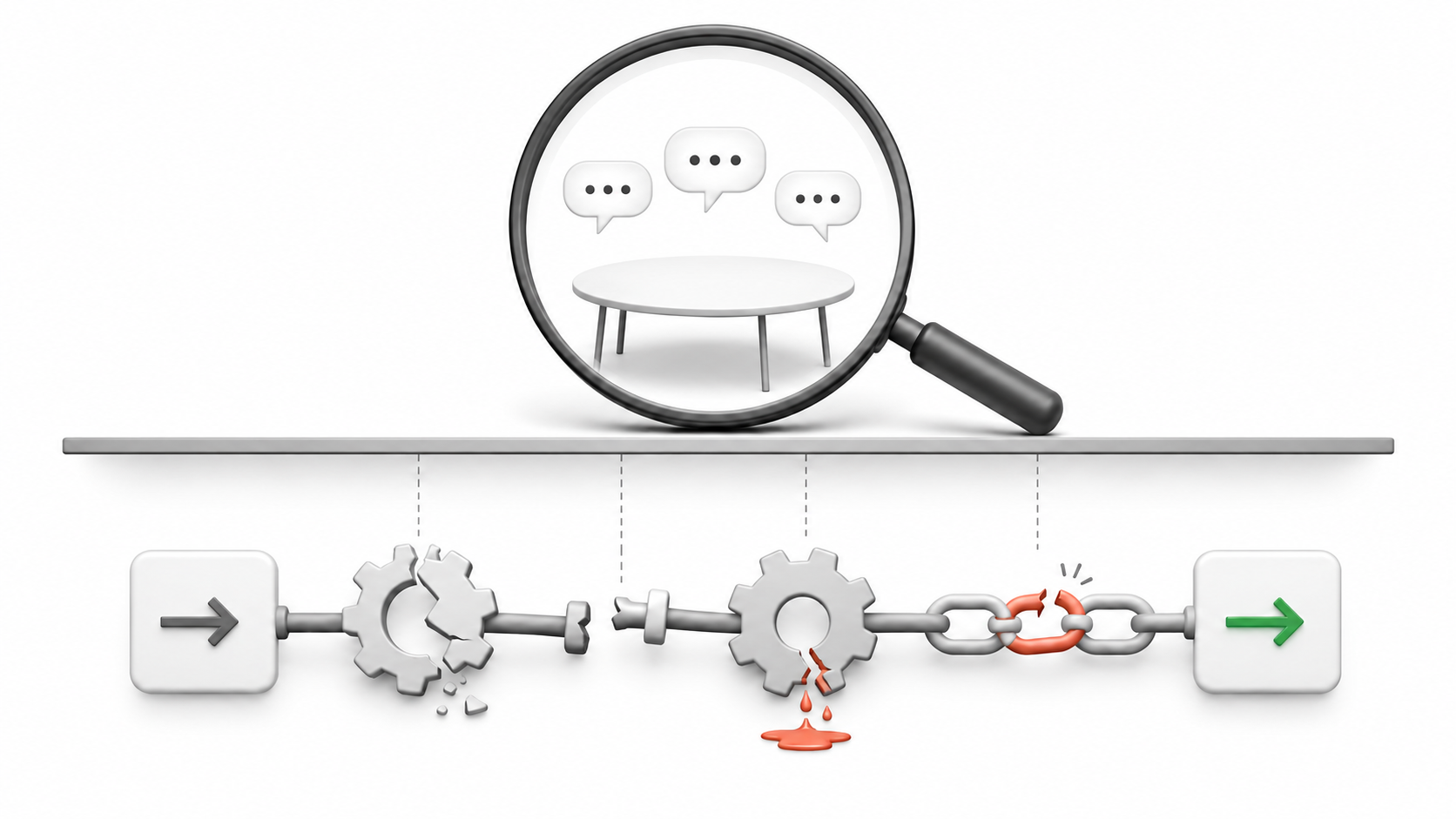
Each time a group designs goals and actions using traditional approaches, they move a design with unknown inaccuracy and incompleteness into implementation. The cost is invisible — until it isn't.