There is no single ROI percentage that would be credible across every type of Group Design.
The value depends on the situation’s Cost of Inaction and the avoidable losses associated with designing the wrong response: unnecessary meeting time, rework, delay, corrective action, under-realized benefits, and missed opportunities.
We compare those costs with the cost of applying SchellingPoint, while measuring whether the design entering implementation has stronger Fit, Feasibility, and Alignment. The result is a situation-specific economic case, not a generic ROI claim.

No.
SchellingPoint is intended for consequential, multi-stakeholder situations in which the response does not already exist, important knowledge is distributed across people or functions, perspectives or constraints differ, and implementation depends on coordinated action.
Routine choices, known procedures, and low-consequence decisions should use lighter methods. The principle is to match the rigor of the Group Design process to the cost and difficulty of getting the design wrong.
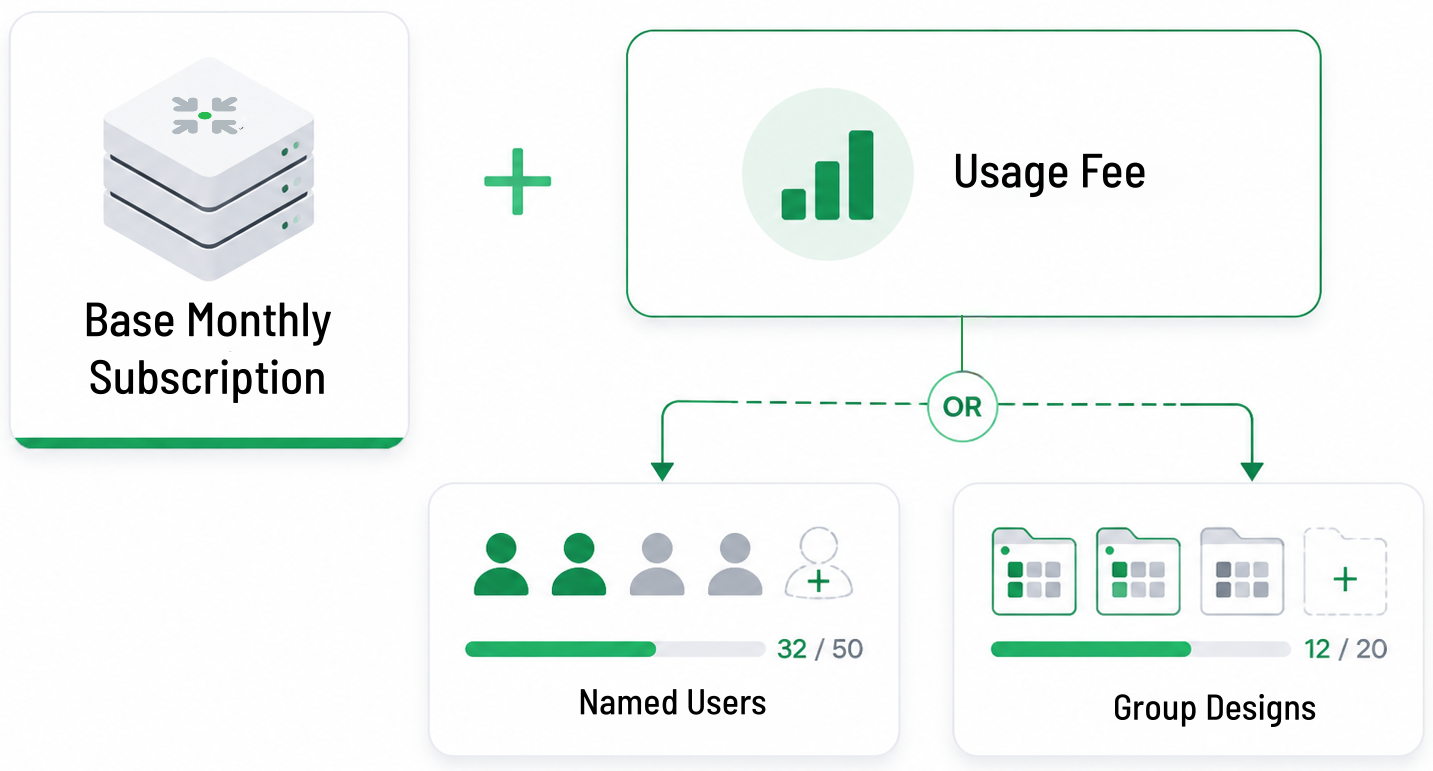
Organizations pay a base SchellingPoint server fee plus a usage-based charge.
Depending on how SchellingPoint will be deployed, usage can be based on the number of permitted users, the number of Group Designs conducted, or a combination of both. Education, guided support, and capability-development services are scoped separately where required.
Each proposal makes the cost drivers explicit so that the organization can estimate the cost of both initial adoption and expanded use. Discounted rates are available for non-profit organizations.
Yes.
A Proof of Concept applies the Optimal GDM methods and SchellingPoint software to a real, consequential situation, typically over two to four weeks. The organization provides the group; SchellingPoint provides the software and Design Guide.
The result is not a staged demonstration. The group receives a usable Group Design, and the organization can examine the process data, design-quality measures, elapsed effort, implementation readiness, and value of the resulting output before deciding whether and where to expand.
No. It changes where their expertise is applied.
Managers remain accountable for the decision. Group members contribute the knowledge, judgment, and commitment needed to design it. Internal consultants and facilitators remain valuable for certain topics, and highly complex, sensitive, or politically difficult situations.
SchellingPoint carries the repeatable workflow, analysis, measurement, and record of the design. The objective is not to remove professional expertise. It is to prevent professional process from existing only when a particular expert happens to be in the room.