Powerful mathematics enable groups to go from their best to the best design
GDM Design Optimization
What to discuss, in what sequence - solved.
Agenda design moved from craft to science.
The Not-So-Humble Agenda
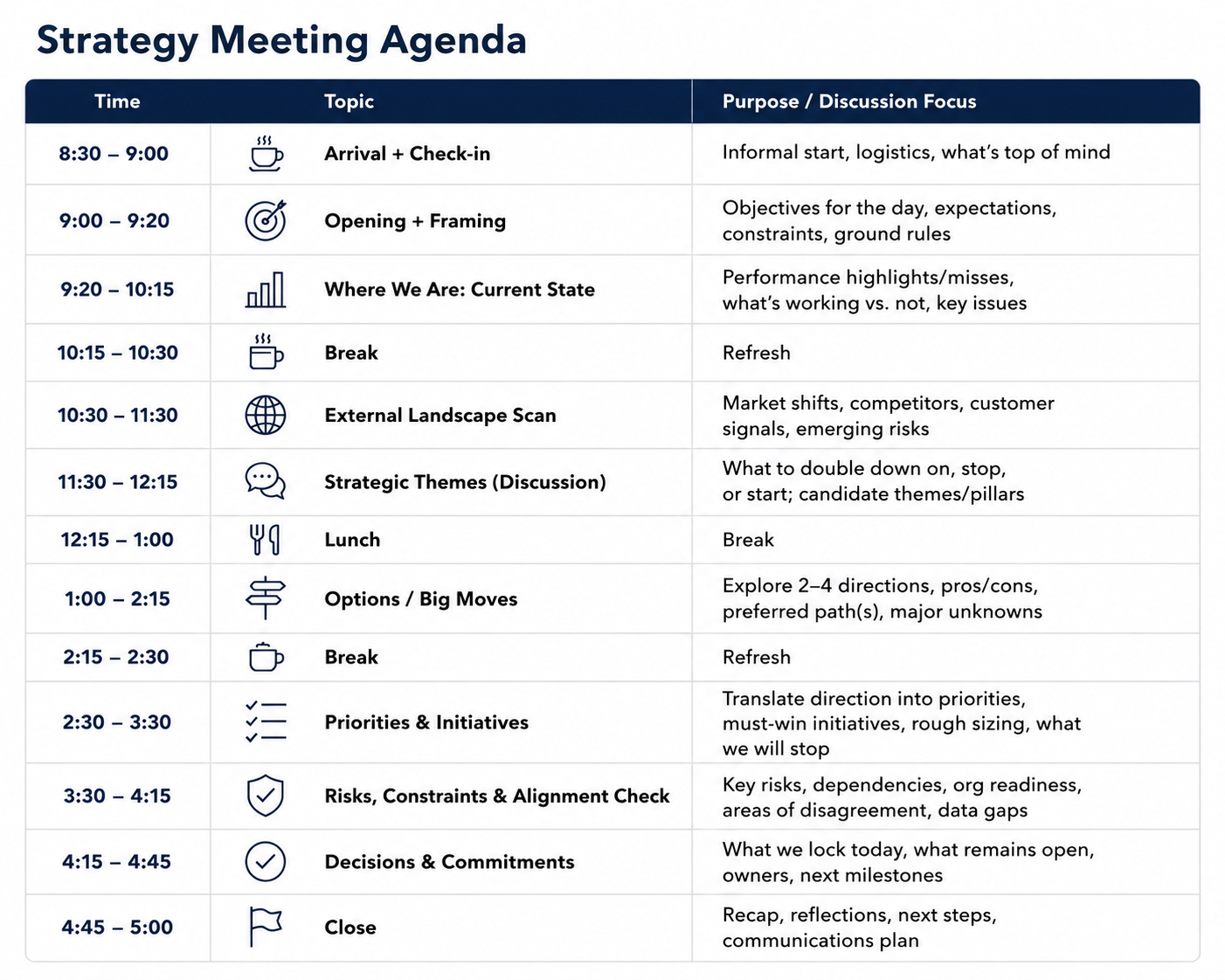
Of all the things a group could discuss, what they discuss, and the sequence in which they discuss each item, defines the solution space in which their goals and plans can land. Yet agenda design has no systematic support. Most are rational and logical but inaccurate and incomplete.
Wrong By Design
Leader Assigns
Facilitator Offers
Both are Wrong
Lacking any guide to do otherwise, leaders prioritize the group's discussion to four, eight, sixteen, twenty four hours of meetings.
Decision guides package faciliation as half-day, full-day, two or more day meetings.
Neither has any connection to how much dialogue the group will actually require. Leader, participants, and guide must deliver the best goals and plans in the artificially assigned time allocation.
Group Decisions are an Optimization Problem
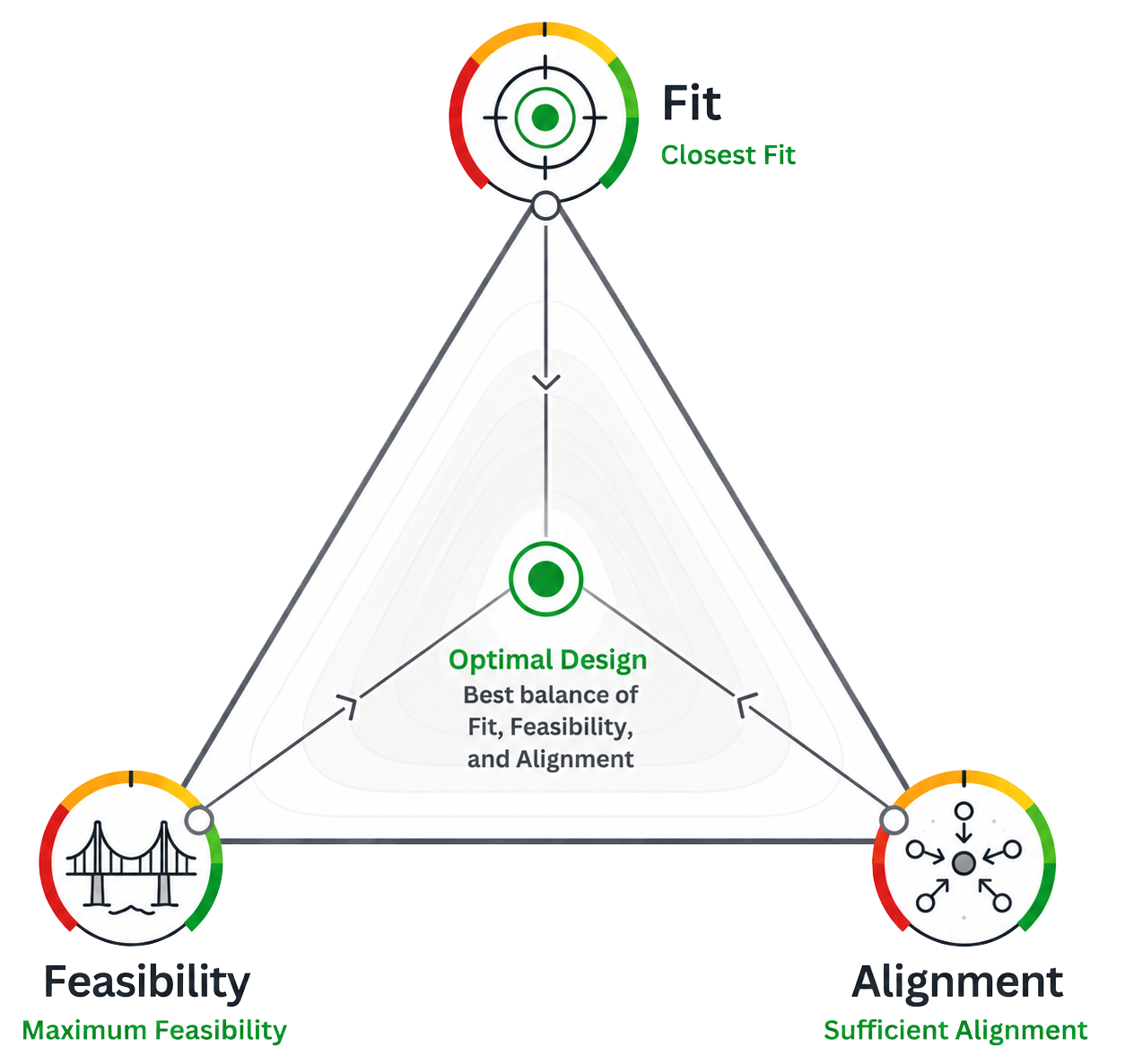
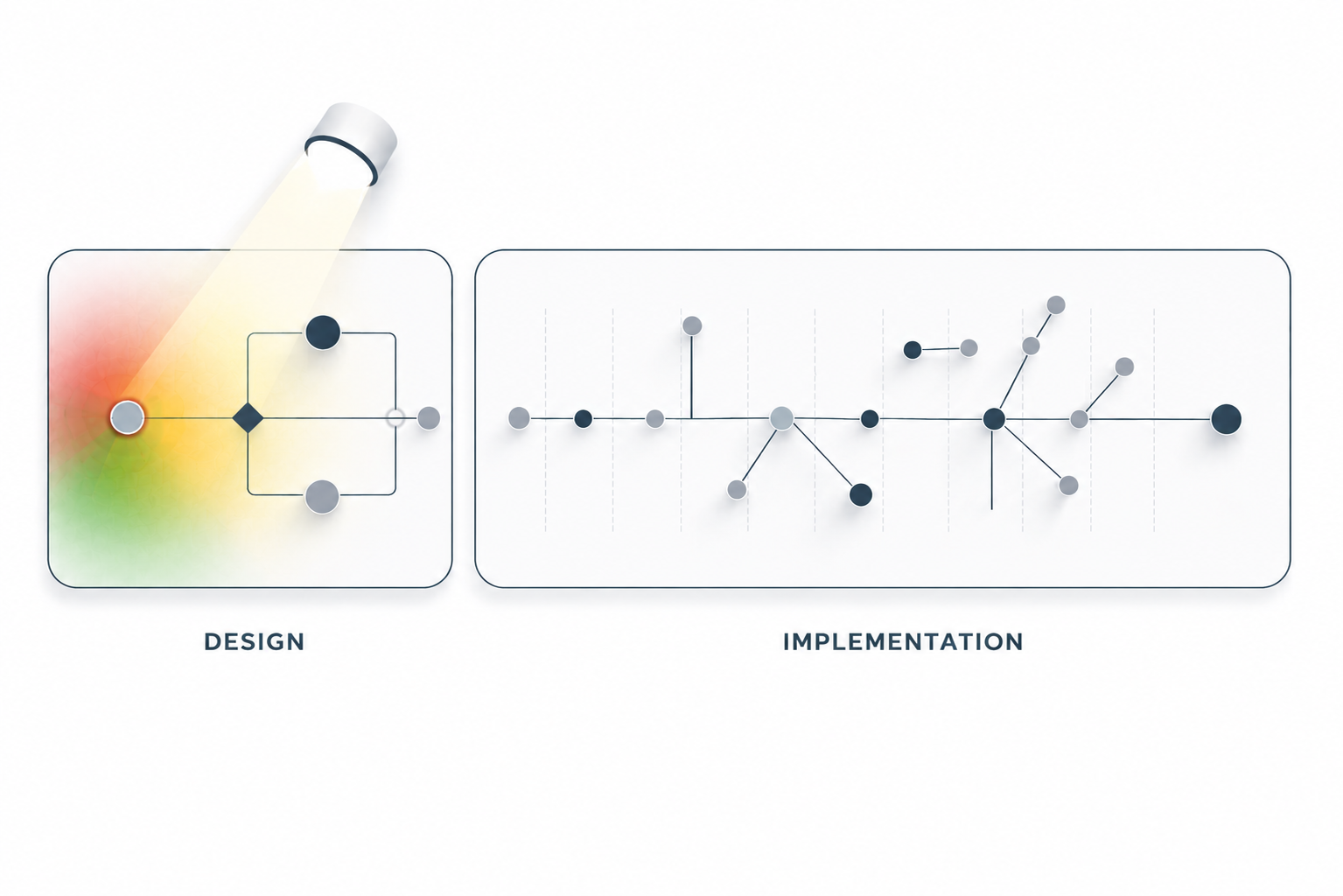
The time allocation is a core constraint. It has to be distributed among different items requiring different discussion times. Different discussions contribute differently to the fit, feasibility, and alignment objectives. Pathing logic determines if item A should be before or after item B.
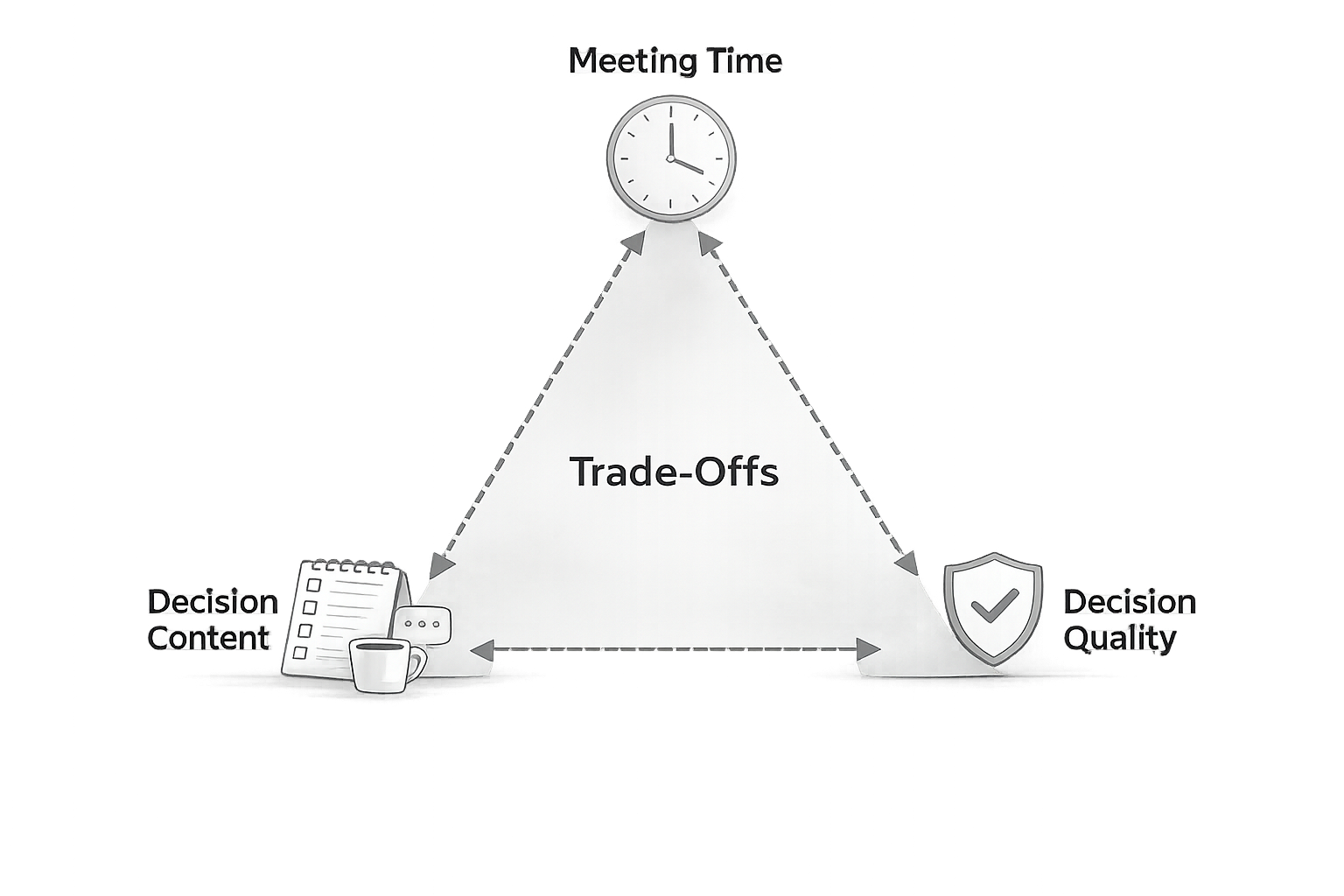
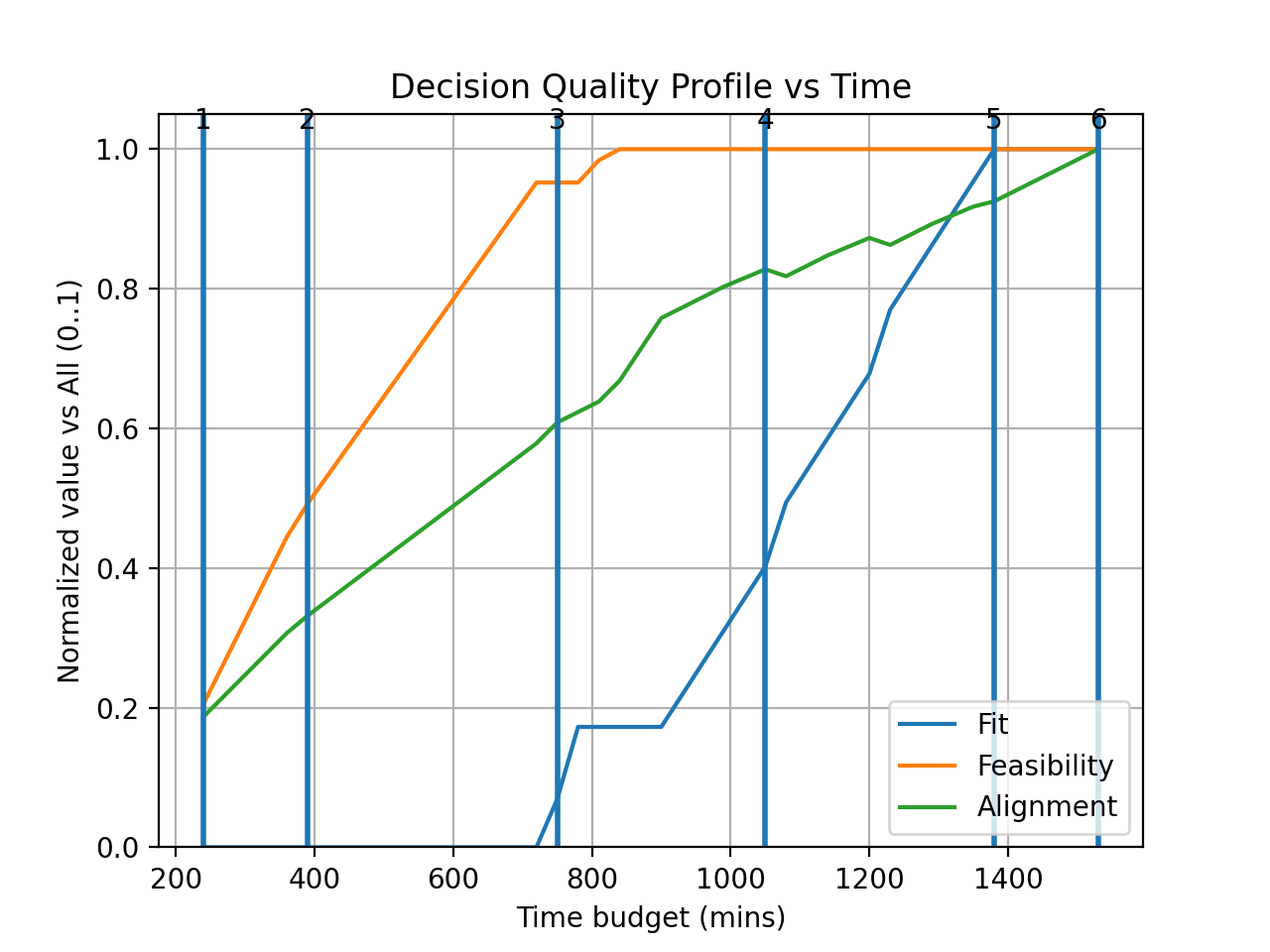
The Time/Quality Trade-Off
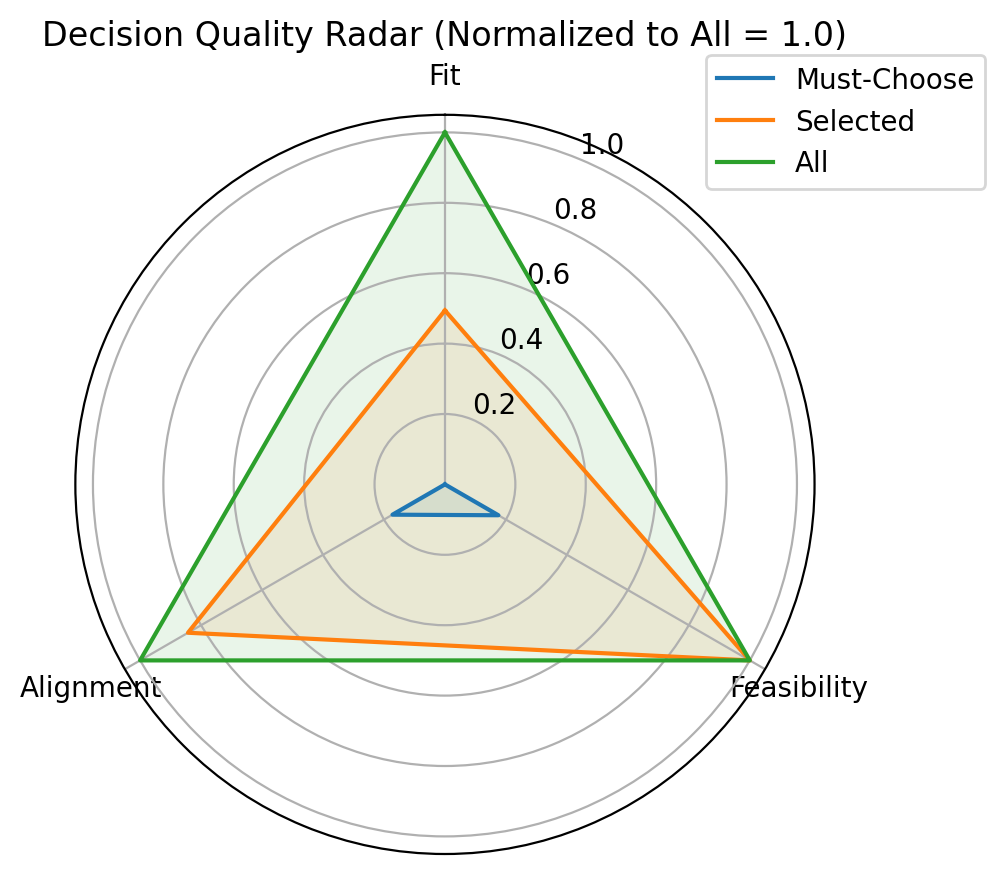
The Agenda Designer shows the Fit, Feasibility, and Alignment profile the minimum and maximum amount of time provides. It then identifies time investments between those two points where the extra time produces a material increase in decision quality.
The Agenda Designer
When one of the time notches is selected, or a custom time, the Agenda Designer proposes the set of group conversations that if conducted successfully, will yield the optimal Fit, Feasibility, and Alignment. What-ifs can be conducted and manual overrides made.
A Step Ahead
The optimal goals and plans still require the group to execute the theoretically correct plan. Just like team sports. But with the four prescribed dialogue methods, the group can have valid confidence they are positioned to design goals plans with the optmal balance of Fit, Feasibility, and Alignment.
A New Level of Control
In less time than leaders often spend crafting custom agendas with no true understanding of the impact on design quality, they can now make granular choices of what to discuss and when with line of sight to the group's output.
Can the proposed agenda be overridden?
Yes. The proposal can be edited, with indications of the effect on Fit, Feasibility, and Alignment.
Can the best agenda be created to fill a one- or two-day schedule?
Yes. Disregard the time/quality notches and enter a custom time—for example, 10 hours for two days of 5 hours of design time each.
Can the agenda be updated partway through?
Yes. Re-running the optimizer will take into account the progress made and the remaining time, or a revised time allowance.
FAQ
Frequently asked questions
▲
Can the proposed agenda be overridden?
▲
Can the best agenda be created to fill a one- or two-day schedule?