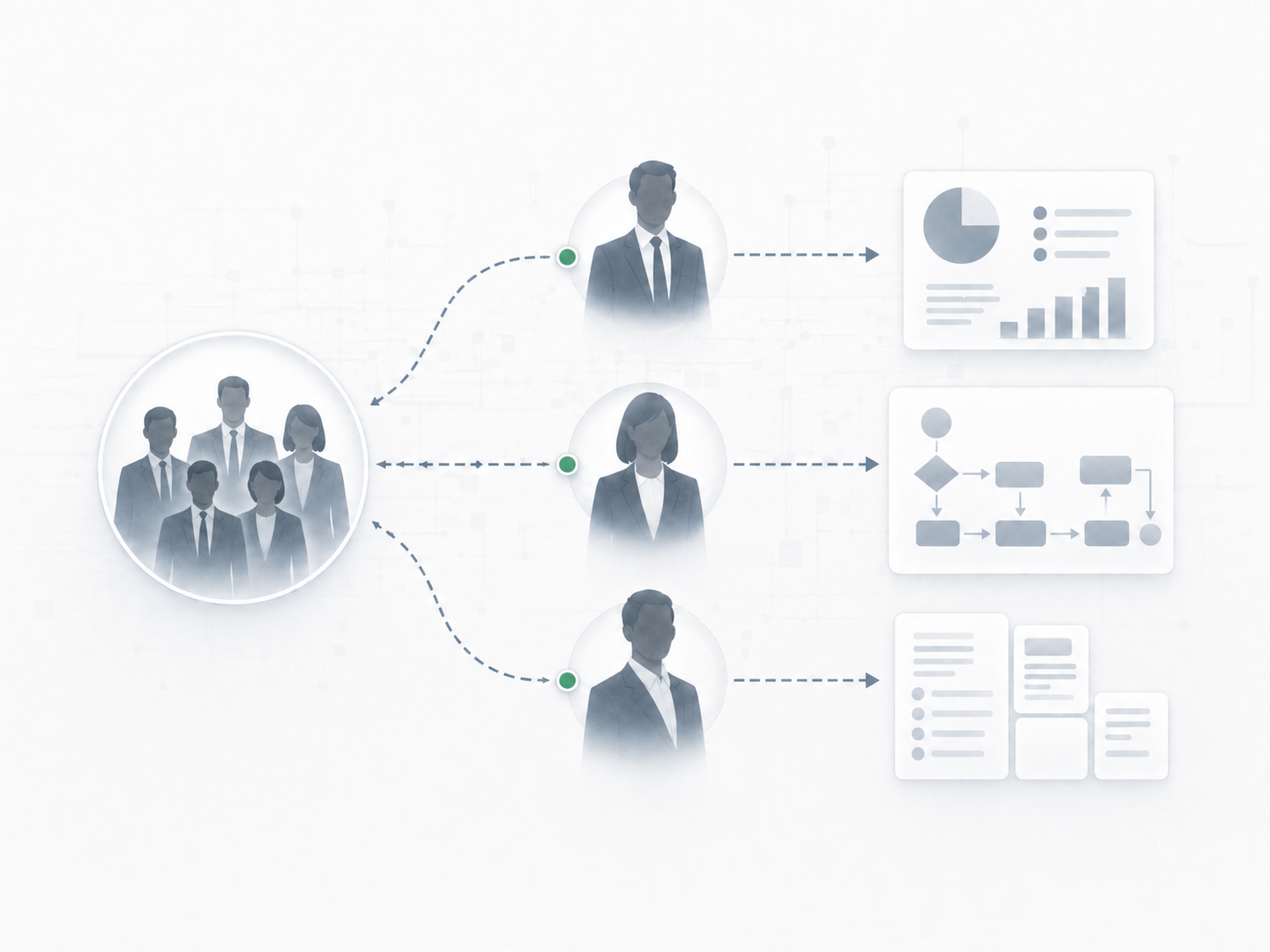
Methodologies and checklists are not enough. Three people will produce three different outputs from the same inputs.
Whether the group decision design steps occur in one four-hour meeting or spread over four weeks, the decision guide does many, diverse things. From ensuring participants have done their tasks to facilitating complicated dialogue around a contentious assumption.
Being human, noone can remember to do the right thing the right way, every time. In the past, that wasn't a problem - the group wouldn't know.
We lift the weight off the decision guide's shoulder with workflow monitoring, guiderail warnings, task suggestions, offering suggestions, so the group get's the highest quality steps for the guide's minimal effort.
methodologies and checklists
The design benefits from the people, doesn't suffer from them
There is always someone - a member of the group, a consultant, a facilitator - who acts as the decision guide, leading the group from signal to response. The groups should design the optimal response, independent of who that person is.
A defined workflow, tasks standards, task how-to, 'guiding hand' notifications, maximize the decision guide's ability to lead the group.
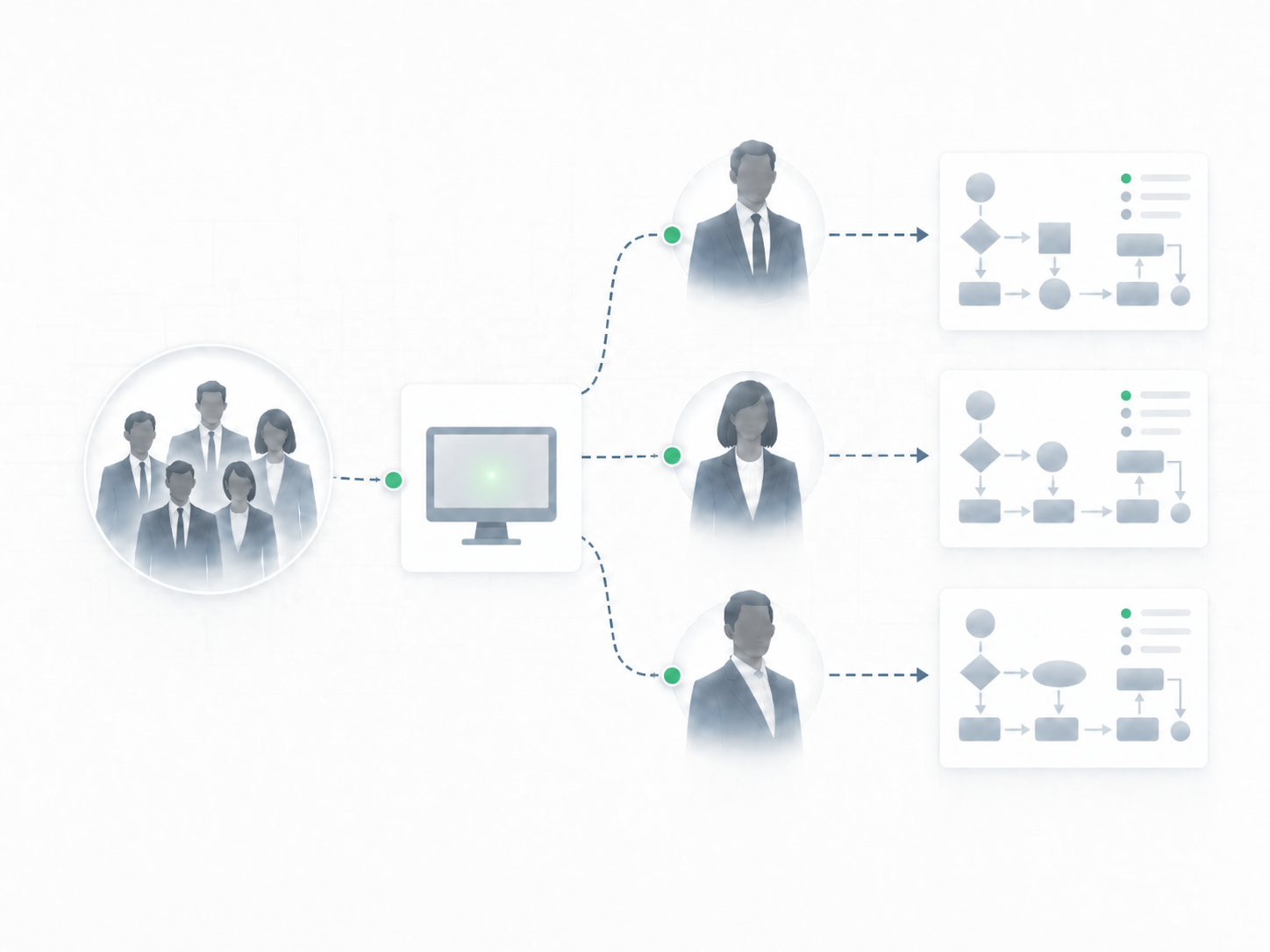
Enable people to get it right time and time again
People struggle to do manual tasks the same way twice. In group decision design, there are multiple activities where the unique group and subject do not warrant a different definition of done.
In Optimal GDM, each method has a defined standard. The software is the group's assistant, ensuring that one step is truly done before they move to the next.
Speed, valid confidence, verifiable quality.