Optimal GDM

The group design practices groups need.

The research-based approach to group design giving groups what they already thought they had.
The future of GDM-Design  

Optimal GDM

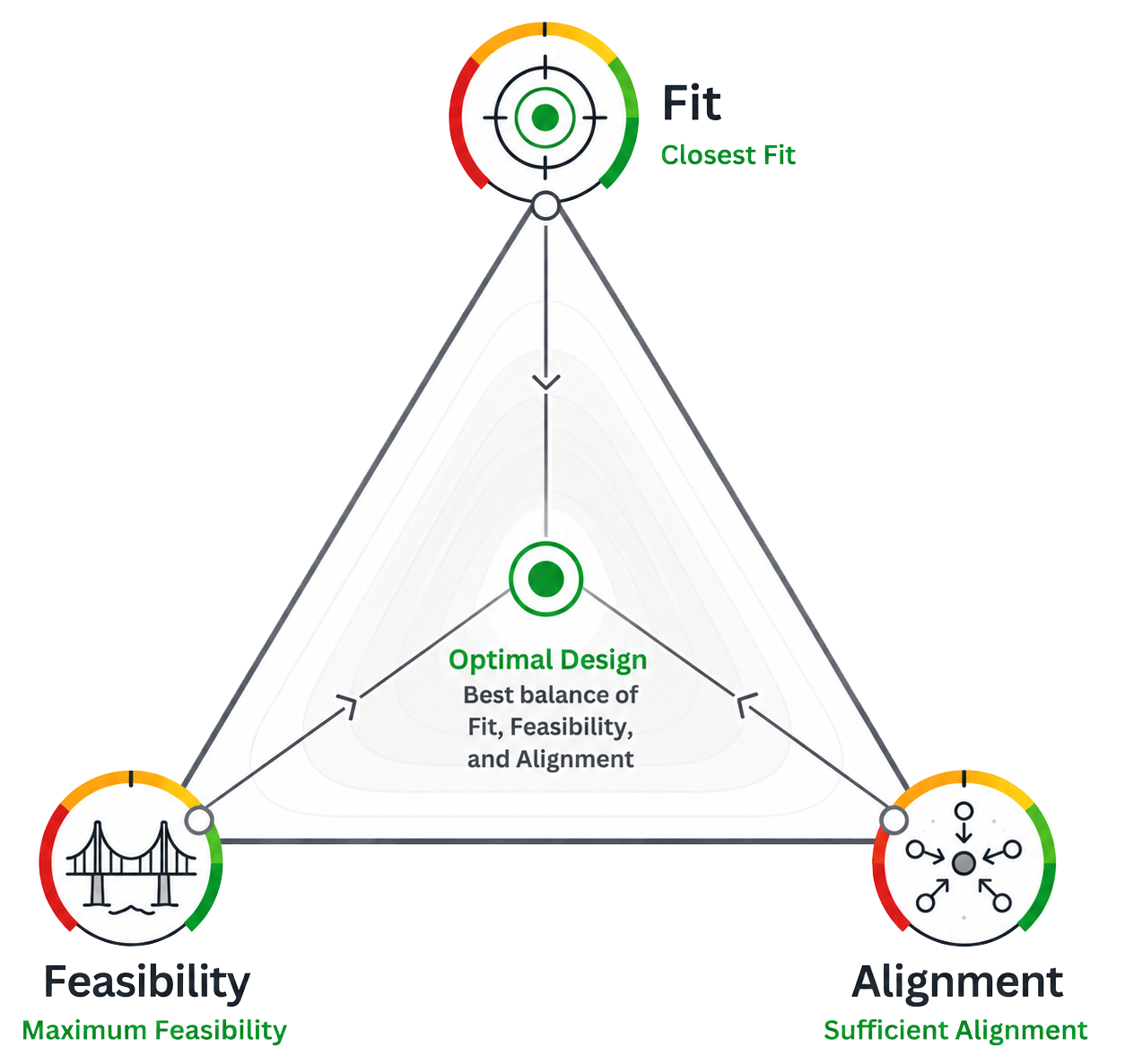
Constructive-GDM is the default, conventional approach most organizations use for GDM-Design: assemble people, discuss, synthesize, and converge toward action. It can produce plausible decisions quickly, but it systematically hides decision weakness by relying on confidence, momentum, and social agreement as proxies for decision quality. In Constructive-GDM, critical assumptions remain tacit, constraints surface late, dissent is suppressed or deferred, and commitment is often implied rather than secured. The result is a common failure mode: decisions that look strong in the room but collapse under real constraints and handoffs. Optimal GDM is designed as a replacement architecture that prevents these quality leaks by design.

Why it persists

Constructive-GDM feels like “how decisions are made.” It produces motion, and motion can look like progress. When outcomes disappoint, organizations often diagnose downstream symptoms (execution, resistance, governance) rather than upstream defects (decision strength).

What it does well

It is fast to start.
It feels familiar and socially legitimate.
It can work for low-stakes or low-complexity decisions.
It can work when constraints are light and authority is concentrated.

Where it breaks

A false positive is a decision that looks strong in the room but is weak in the world.
It often contains: unspoken assumptions that later conflict,
unacknowledged constraints that halt progress,
implied commitments that turn into drift,
and a success definition that is vague enough to hide misalignment until execution.
FAQ
Frequently asked questions
What if I don't need our goals and actions to be optimal?
What is Optimal GDM?
What problem does Optimal GDM solve?