Optimal GDM Frames

Frames - the expert's secret weapon

Group decision design now has them. And they reveal what's present for an optimal design, and what's missing.

Frames

Frames are the business professional's power tools. They turn make complex subjects into manageable structures. They illuminate and inform.

Sound Concepts Yield Valuable Frames

Weak methods have placed the performance burden on leaders, consultants, and facilitators

Constructive GDM

Optimal GDM

Why It Matters

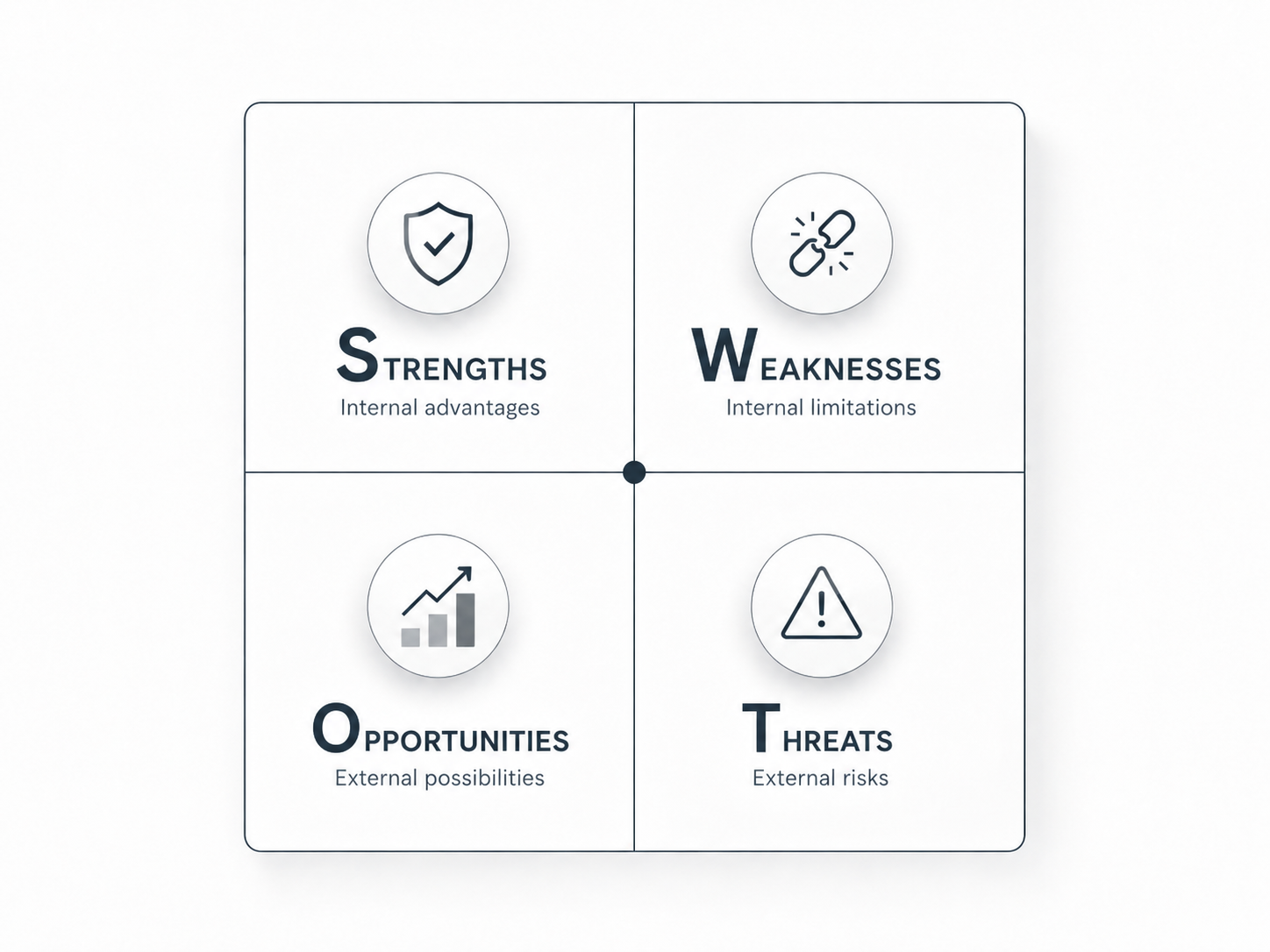
SWOT

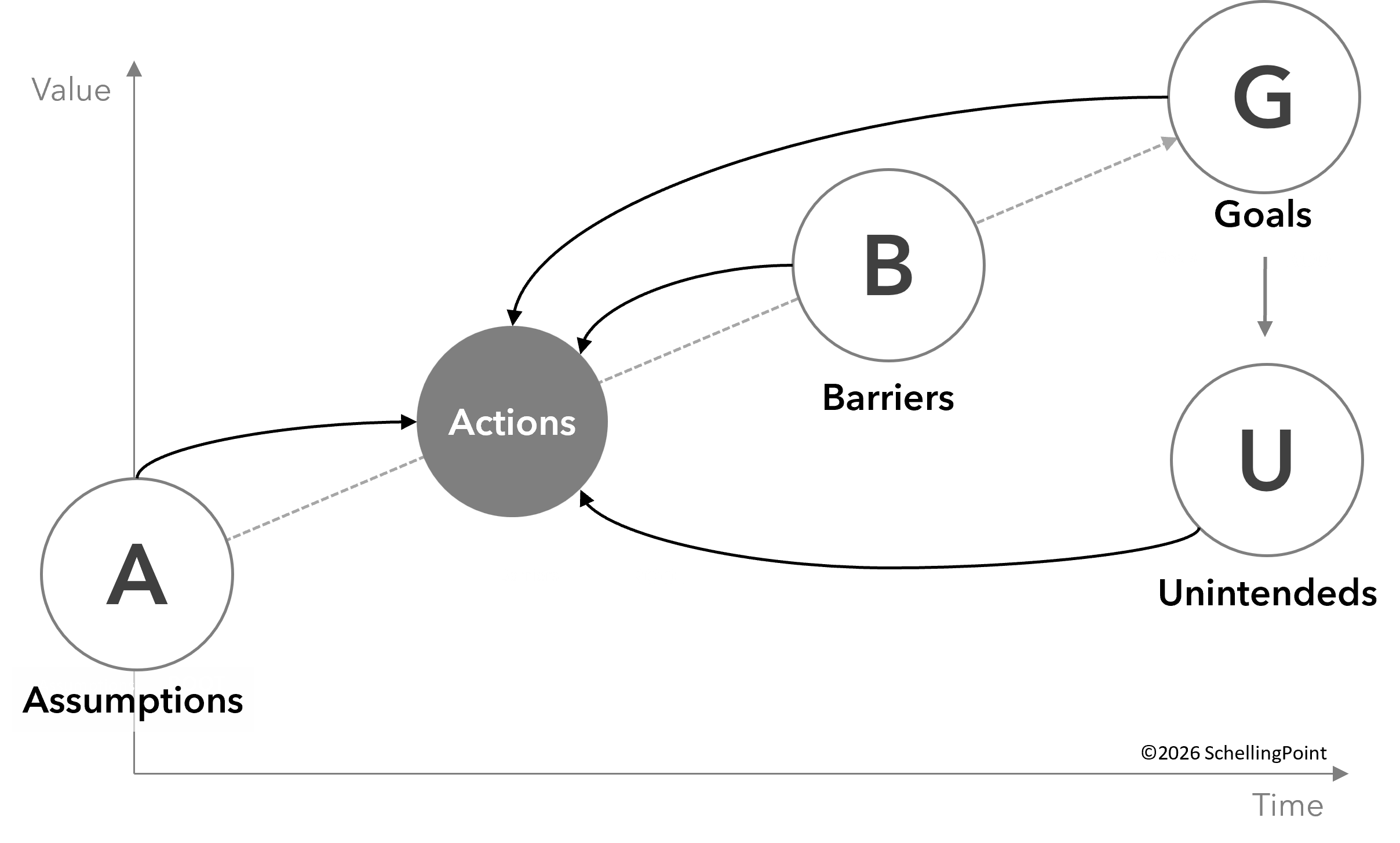
GUBA

SWOT is the only universal frame to trigger a group’s opinions. GUBA triggers all opinion types for all topics.

Subjective "Best"

Objective Strength

Output quality has been a subjective claim. Optimal GDM measures optimal Fit, Feasibility, and Alignment.

Unique Sequences

Outside-In Sequence

Each situation uses a different dialogue pathing logic.  Our research found one that works for all topics.

Public Frames

SWOT is one of the most famous frames, used by group for decades to discuss situations.

Proprietary Frames

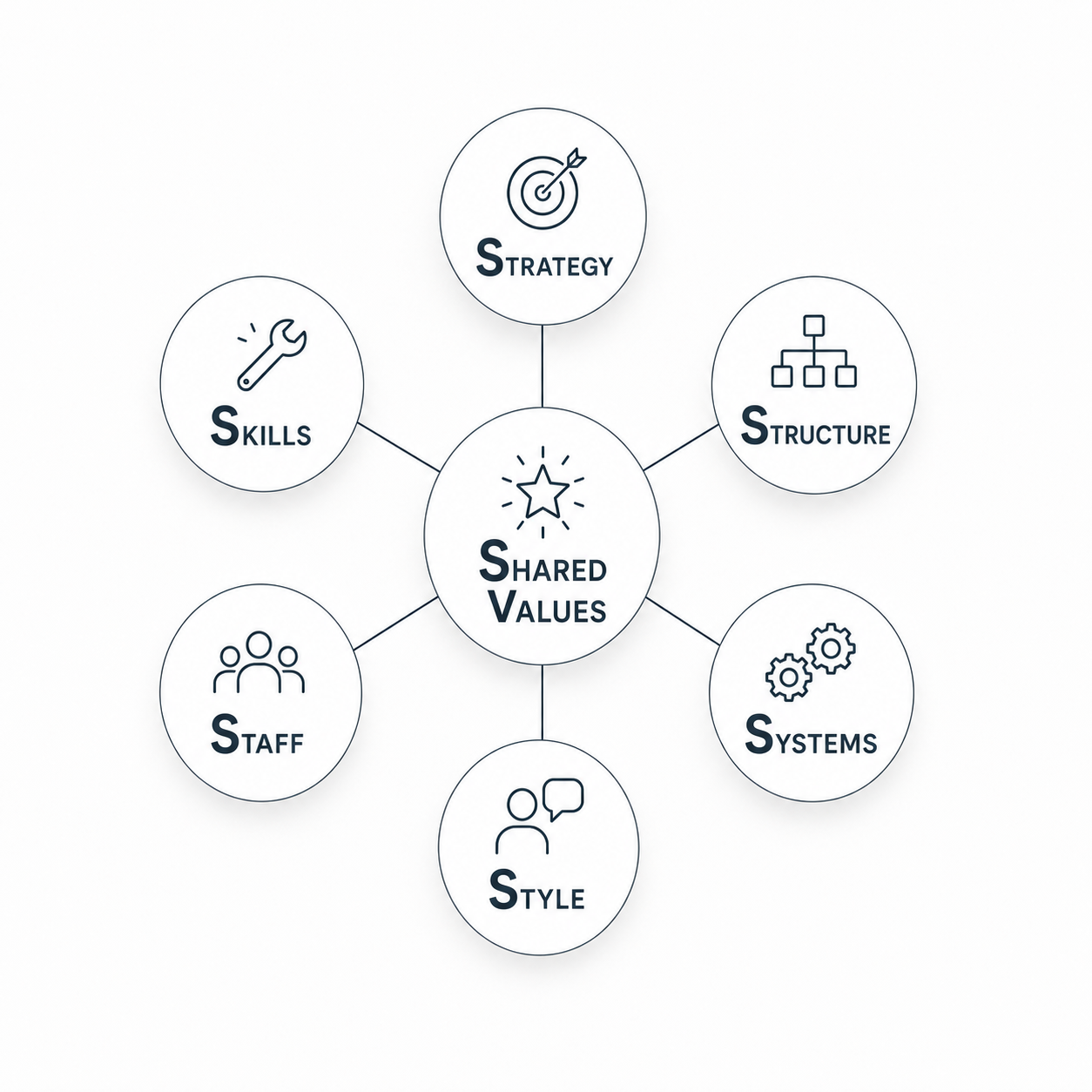
Management consultants develop frames for specific business problems and subjects. Their frames enable them to diagnose and identify problems and opportunities. (Example: McKinsey 7S)

Group Decision Making Frames

There have been no universal, public frames for GDM-Design groups could take advantage of. The research identified several.

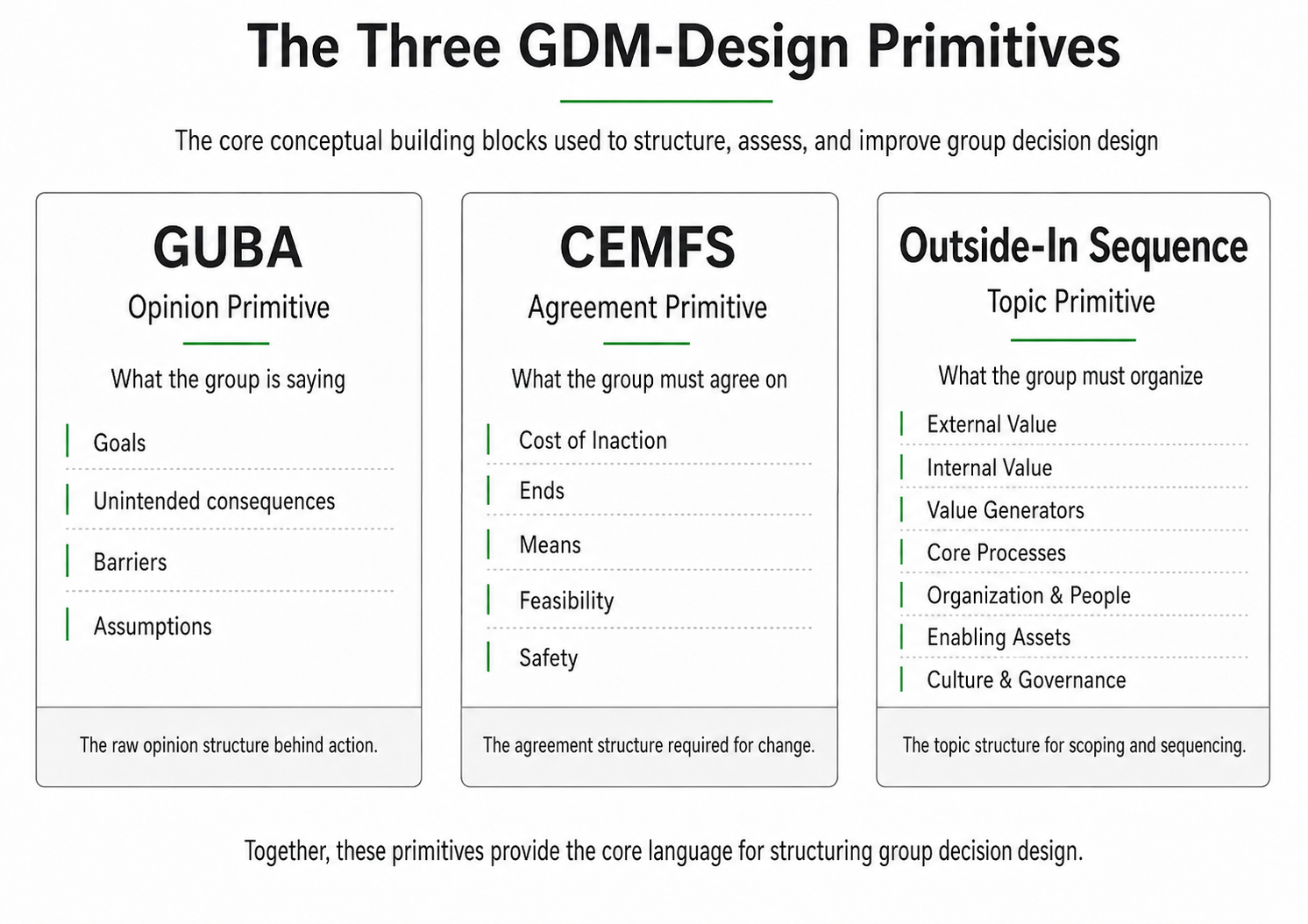
The 5 Change Agreements

A strategic group decision comprises actions that will create change.
Cognitive Psychology's fundamental theory of change informs us a valid design must satisfy five requirements.

The 4 Root Opinions

Opinions are a group's decision raw material. There are four types of root opinion from which all action opinions are derived.

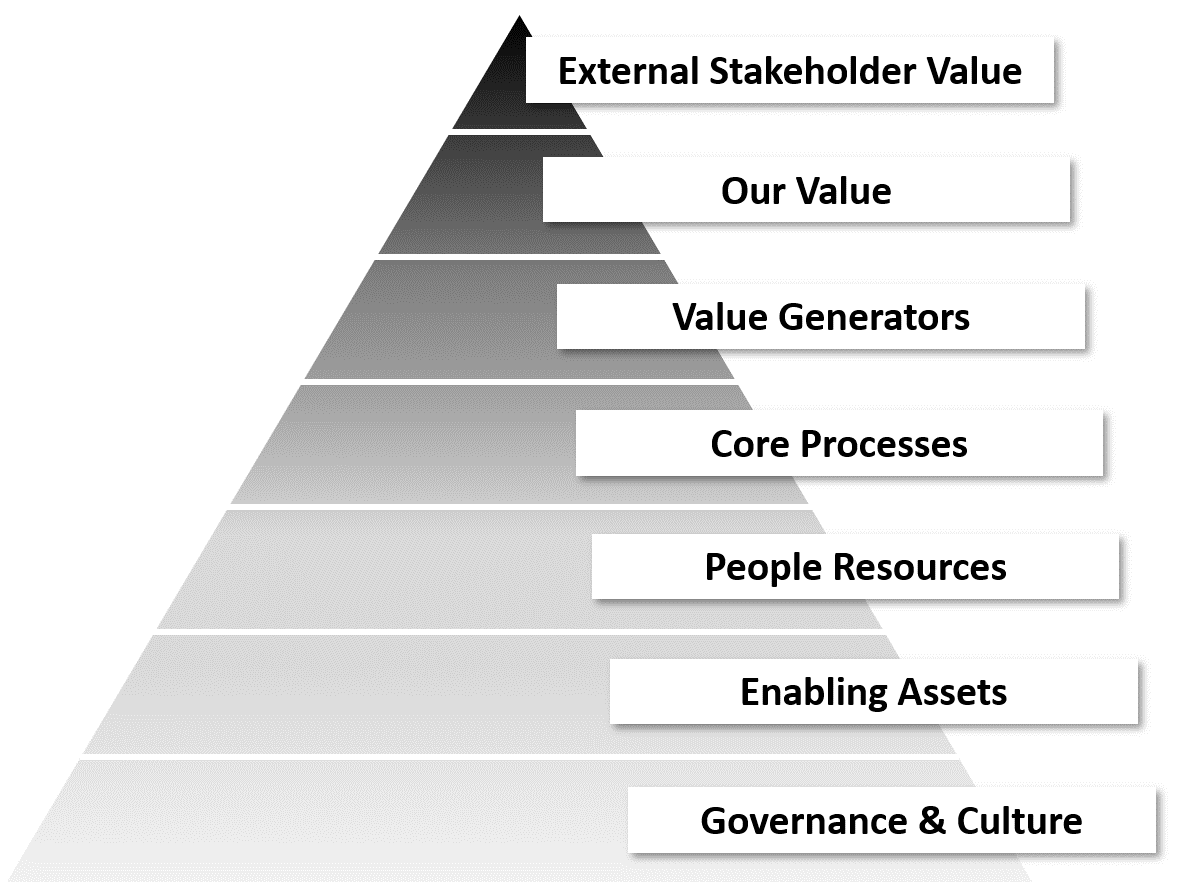
The 7 Topic Tiers

Groups decisions have lacked a central frame that both prevents silo, parochial behavior while ensuring technical integrity - the design doesn't just look right, it is right.

Making GDM-Design Visible

The triad are primitives because they behave like stable units across contexts: once you can see them, you can diagnose group decision failure modes and design better ones.

Invisible Design

You can use these frames manually. Using invisible design methodology, these and additional frames are integrated into the steps. They silently guide the group's dialogues toward the optimal design.

Sound Concepts Yield Valuable Frames

Weak methods have placed the performance burden on leaders, consultants, and facilitators

Constructive GDM

Optimal GDM

Why It Matters

SWOT

GUBA

SWOT is the only universal frame to trigger a group’s opinions. GUBA triggers all opinion types for all topics.

Subjective "Best"

Objective Strength

Output quality has been a subjective claim. Optimal GDM measures optimal Fit, Feasibility, and Alignment.

Unique Sequences

Outside-In Sequence

Each situation uses a different dialogue pathing logic.  Our research found one that works for all topics.
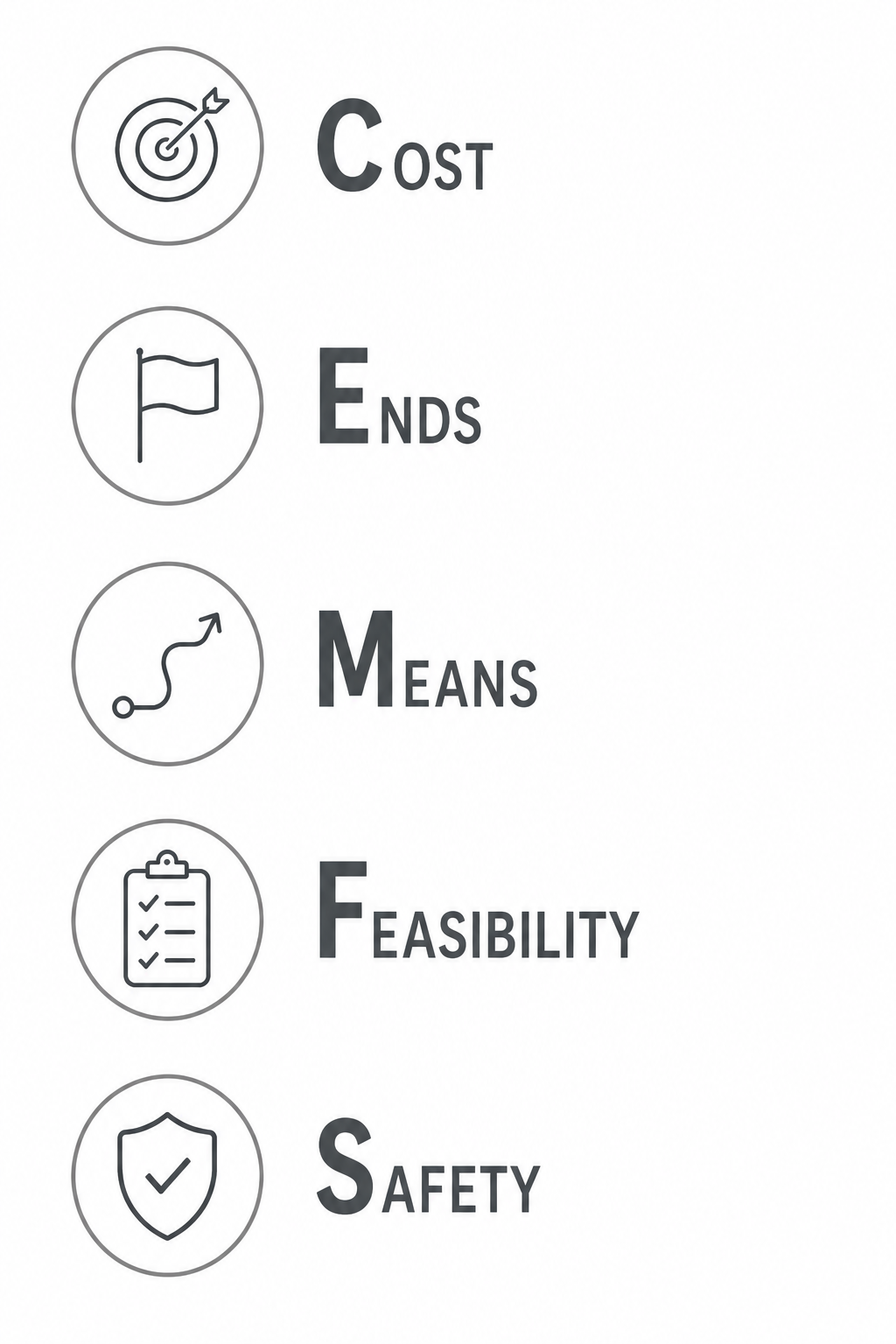
Do I need to memorize the GUBA, CEMFS, and Outside In frames?
If you want to guide a group toward the optimal design for the shared topic, these three frames are essential. You can print them out from their pages on this site. They are embedded into the software, AI, and Optimization logic at the appropriate steps in the Group Design process so that you don't have to memorize them.
How should I use SWOT and other frames in future Group Design situations?
SWOT, PESTEL, and other frames become secondary to the Group Design meta frames. For example, when designing change, the ADKAR frame can be layered over the opinions. Porter's Five Forces can be layered over the opinions in a business strategy, go-to-market topic. However, without the primary meta frames, analysis is incomplete for an optimal design.

Can I add my own frames to a Group Design situation?
Yes. After the SchellingPoint meta frames are used, a unique frame could be used for each different type of topic. McKinsey 6S, ADKAR, Porter's Five Forces, and other common frames are only applicable to the type of topic for which they were designed. You can embed your proprietary frame as a template in the SchellingPoint software.
FAQ
Frequently asked questions
Do I need to memorize the GUBA, CEMFS, and Outside In frames?
How should I use SWOT and other frames in future Group Design situations?
Can I add my own frames to a Group Design situation?